Exceptional Customer Service @ 9336832036
Buy more save more - Buy 2 pairs — extra 10% off
Buy 1 Pair of Flip Flops, Get 1 Pair FREE!
Extra 5% OFF on Prepaid Orders + Free shipping
Exceptional Customer Service @ 9336832036
Buy more save more - Buy 2 pairs — extra 10% off
Buy 1 Pair of Flip Flops, Get 1 Pair FREE!
Extra 5% OFF on Prepaid Orders + Free shipping
Exceptional Customer Service @ 9336832036
Buy more save more - Buy 2 pairs — extra 10% off
Buy 1 Pair of Flip Flops, Get 1 Pair FREE!
Extra 5% OFF on Prepaid Orders + Free shipping
Exceptional Customer Service @ 9336832036
Buy more save more - Buy 2 pairs — extra 10% off
Buy 1 Pair of Flip Flops, Get 1 Pair FREE!
Extra 5% OFF on Prepaid Orders + Free shipping
Exceptional Customer Service @ 9336832036
Buy more save more - Buy 2 pairs — extra 10% off
Buy 1 Pair of Flip Flops, Get 1 Pair FREE!
Extra 5% OFF on Prepaid Orders + Free shipping
Exceptional Customer Service @ 9336832036
Buy more save more - Buy 2 pairs — extra 10% off
Buy 1 Pair of Flip Flops, Get 1 Pair FREE!
Extra 5% OFF on Prepaid Orders + Free shipping
Exceptional Customer Service @ 9336832036
Buy more save more - Buy 2 pairs — extra 10% off
Buy 1 Pair of Flip Flops, Get 1 Pair FREE!
Extra 5% OFF on Prepaid Orders + Free shipping
Exceptional Customer Service @ 9336832036
Buy more save more - Buy 2 pairs — extra 10% off
Buy 1 Pair of Flip Flops, Get 1 Pair FREE!
Extra 5% OFF on Prepaid Orders + Free shipping
Exceptional Customer Service @ 9336832036
Buy more save more - Buy 2 pairs — extra 10% off
Buy 1 Pair of Flip Flops, Get 1 Pair FREE!
Extra 5% OFF on Prepaid Orders + Free shipping
Exceptional Customer Service @ 9336832036
Buy more save more - Buy 2 pairs — extra 10% off
Buy 1 Pair of Flip Flops, Get 1 Pair FREE!
Extra 5% OFF on Prepaid Orders + Free shipping
Made in Kanpur Footwear: What Buyers Should Verify
STEPSOFT
0 comments
Editorial illustration for this buyer-verification guide; not a factory photograph or product test.
“Made in Kanpur footwear” can describe a product’s manufacturing origin, a brand’s business location, or simply a seller’s connection to Kanpur—and those are not the same claim. Before buying, verify the exact product page, manufacturer or marketer details, country of origin, materials, size options, stock, and current delivery and return terms.
STEPSOFT is a Kanpur-based Indian online footwear brand and store. Its live catalogue includes men’s Kolhapuri-style chappals, Peshawari sandals, juttis, mojaris, loafers, sandals, slippers and flip-flops. That business location does not by itself establish that every listed pair was manufactured in Kanpur. Product-level wording should decide what you can accurately say about a particular pair.
What does “made in Kanpur footwear” actually mean?
Wording you may see
What it establishes
What it does not automatically establish
Kanpur-based brand
The brand or online store identifies Kanpur as its business base.
That every product was manufactured, stitched or finished in Kanpur.
Marketed by a Kanpur business
The named business is responsible for marketing the product.
The location of every factory, workshop or supplier.
Country of origin: India
The product identifies India as its country of origin.
A specific city, workshop or production method.
Made in Kanpur
A specific origin claim for that item, when stated by the responsible seller or manufacturer.
Material, quality, durability, handmade status or certification.
Handcrafted
A product-specific construction claim when the listing supports it.
That the pair is leather, waterproof, GI-certified or made in Kanpur.
This distinction matters because a business can design, source, market and support footwear from one city while using suppliers or production partners elsewhere. A careful product page should separate brand identity from item-specific facts.
Why Kanpur matters in India’s footwear ecosystem
Kanpur is a major industrial city in Uttar Pradesh. The Government of Uttar Pradesh’s current Leather & Footwear Policy 2025 page says Kanpur leads in leather accessories, safety footwear and saddlery, while the wider state policy covers both leather and non-leather footwear. The Kanpur Nagar district website also describes Kanpur as a major industrial town.
That industrial context is useful, but it is not a shortcut for judging one pair. City reputation cannot replace the exact listing, the label on the product or the seller’s written information.
A seven-point checklist before you buy
1. Confirm who the seller or brand is
Look for a consistent business name, official domain, contact page and customer-support details. A marketplace seller name, a brand name and a manufacturer name can be different, so read each field rather than assuming they refer to one company.
Look for “country of origin,” “manufacturer,” “marketed by” or a clear item-specific origin statement. If a page only says that the brand is based in Kanpur, treat that as a business-location fact—not a manufacturing claim.
If the origin matters to your purchase, ask the seller for written confirmation for the exact product or SKU before ordering.
3. Read materials component by component
Do not rely on appearance alone. Similar designs may use genuine leather, faux leather, suede, textile, EVA, rubber or mixed materials. Check the upper, lining, footbed and outsole separately where the information is available.
“Leather-look” is not proof of leather. “Handcrafted” is not a material. “Made in India” does not identify the city. Each statement answers a different question.
4. Compare construction in the images
Use clear photographs to examine the toe shape, strap position, closure, visible stitching, sole edge and finish. Images help you compare designs, but they cannot independently prove hidden materials, durability or production origin.
Footbed coverage, strap security, outsole view and stated care.
This is a style selector, not a claim that every item in a category has the same material, origin or performance.
6. Check size, stock and final payable amount
Select the exact colour and size before trusting the displayed stock or price. Measure both feet and compare the product information rather than assuming every sandal, slipper and closed shoe fits identically. The sandal and shoe size guide explains the basic fit check.
Also review the final checkout total. The product price and the amount payable after delivery or payment-related charges are separate checks.
7. Read delivery and return terms before wearing outdoors
Check the current shipping policy and return and refund policy before ordering. Delivery estimates and serviceability should be confirmed for your own postcode.
Whether you are ordering in Kanpur, Lucknow, Delhi NCR, Mumbai, Bengaluru or another Indian location, do not infer a guaranteed delivery speed from the brand’s city. Keep a realistic buffer for weddings and festivals.
Which evidence answers your origin question?
Start with the claim you want to verify. A genuine company address can still be the wrong evidence for a particular pair's production location. Use this checklist to decide what to ask next, rather than treating every document as proof of the same thing.
Match each piece of evidence to the question it can answer
Evidence you have
Useful for checking
Still ask or compare
Brand About or Contact page
The business's stated identity and location.
Which manufacturer and production location apply to your exact model?
Courier dispatch or return address
Where that parcel was sent from or should be returned.
A warehouse or return location is not automatically the manufacturing location.
Invoice or order confirmation
The seller and the item ordered, including any stated model or variant.
Does its item description match the selected product, colour and size? An invoice address alone does not identify the factory.
Product or packaging label
The manufacturer, marketer and origin information actually printed for that item.
Does the model or SKU match your pair, and does the label name a city or only a country?
Written seller clarification
An answer tied to a named product and selected variant.
Ask the seller to distinguish manufacturer, marketer, dispatch point and production city; keep any unknown answer explicit.
Workshop photo or brand video
The process or setting that is visibly shown.
Is the exact model identified? A general workshop scene does not independently trace every catalogue item.
This is a shopping checklist, not a manufacturing audit or certification. We have not inspected a factory, traced a production batch or independently verified the manufacturing city of the products linked below.
Two current STEPSOFT listings to practise the check
On 19 October 2026, the following product families had available variants in the live catalogue. They are examples to compare, not a list of independently verified Kanpur-made footwear. Availability can change after this check.
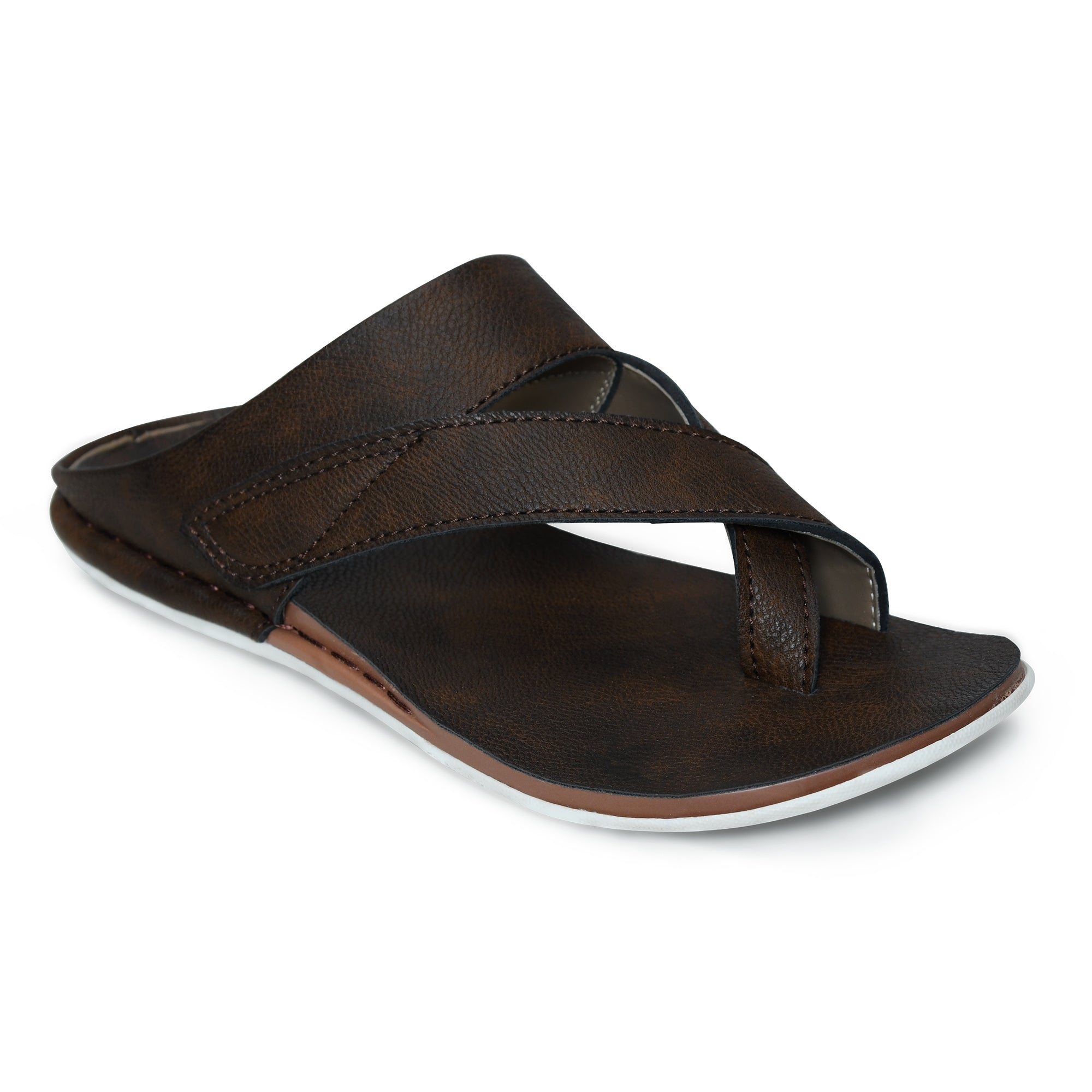
Signature Kolhapuri-style slipper: the catalogue's size 6 / Brown option was available. Compare the selected variant, product-specific material information and manufacturer details; do not infer a production city from the style name.
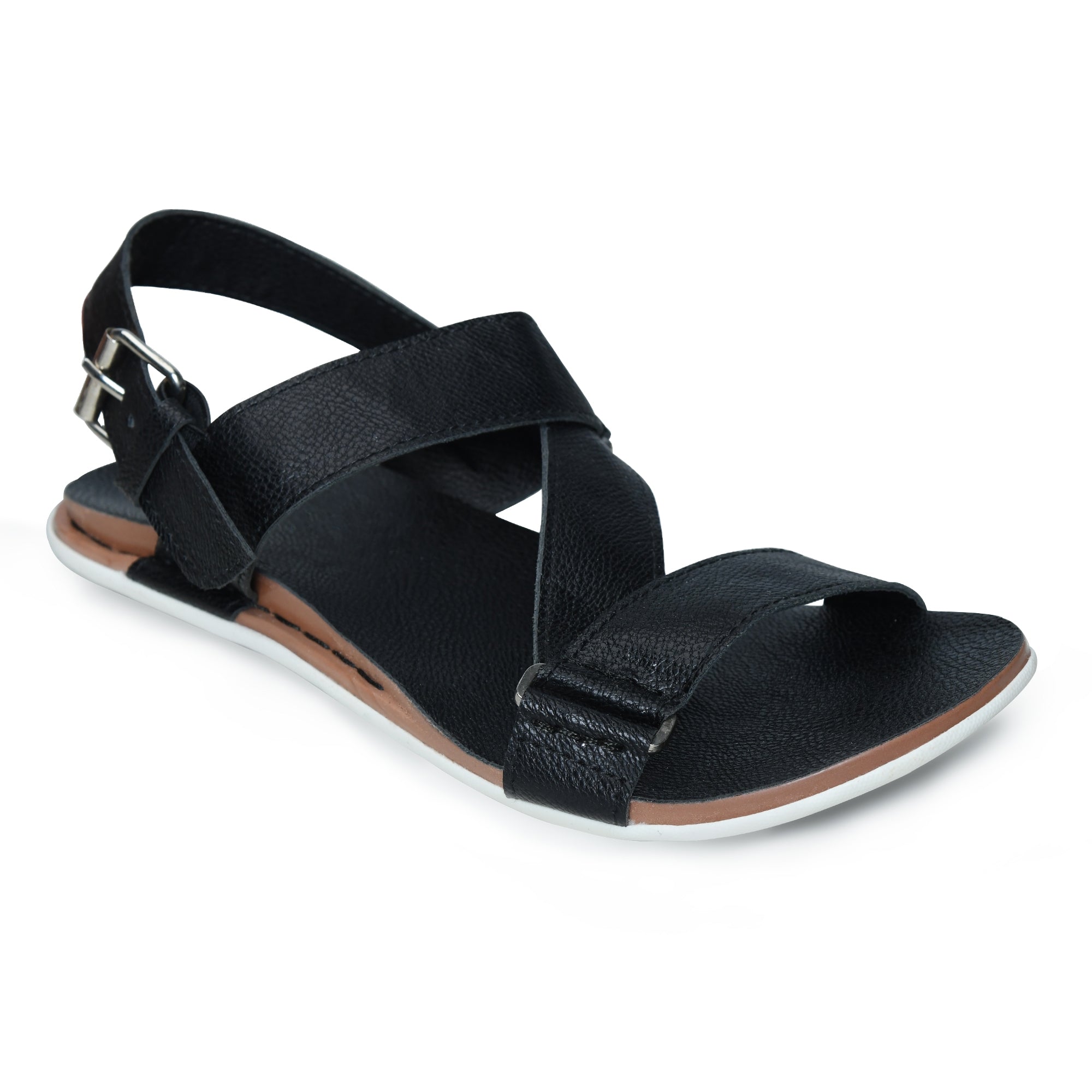
Peshawari sandal: the catalogue's size 6 / Brown option was available. Its product-specific upper is listed as faux leather. If a generic tab says genuine leather, ask for a corrected, model-specific answer before relying on either claim.
Choose your own size and colour on the product page. These examples do not verify comfort, grip, artisan production, whole-shoe vegan status or manufacturing origin. If you are choosing primarily by material, use the faux-leather buying guide to frame your questions, not as evidence about an unlisted component.
What to do when the listing and label disagree
Before ordering: keep the product link and selected colour-size or SKU, note the two conflicting statements, and ask which specification applies. If origin is essential to your purchase, wait for a clear written answer rather than guessing.
When the pair arrives: compare the model, colour and size with your order, and photograph relevant packaging or labels while retaining the packaging. A difference should be clarified; it is not by itself proof of a particular manufacturing story.
Before outdoor use or a return request: read the current STEPSOFT return and refund policy and contact support about the discrepancy. Do not assume that every mismatch has the same remedy or that this guide changes the store's approved terms.
For a useful support request: “For product [link], colour [colour], size [size] and SKU [if shown], the product page says [statement] while [label or section] says [different statement]. Please confirm the correct manufacturer, country and city of production if known, plus the material specification for this exact model.” Send order details only through the store's support channel, not in a public review or comment.
Quick product-origin verification message
If the listing is unclear, send this concise question before buying:
“Please confirm the manufacturer or production origin, country of origin, upper material, lining, outsole and care instructions for this exact product and colour-size variant.”
Ask for the answer in writing. This prevents a general brand statement from being mistaken for a product-specific fact.
Common red flags
Every item receives the same manufacturing story: different product families may have different suppliers, materials or processes.
Material terms conflict on one page: for example, the title says faux leather while a generic section says genuine leather.
“Handmade,” “waterproof” or “anti-skid” appears without item-specific support: do not treat a broad marketing block as proof for every variant.
The price or stock changes after selecting a variant: recheck the exact colour and size before paying.
The city name is used as a quality guarantee: origin and quality are separate questions.
No current policy or contact path is visible: resolve support, shipping and return questions before ordering.
Frequently asked questions
Is all footwear sold by a Kanpur brand made in Kanpur?
No. A Kanpur-based brand identifies its business location. It does not automatically establish the production city of every product. Check the exact item’s manufacturer, marketer and origin wording.
Is all Kanpur footwear made of leather?
No. Uttar Pradesh’s current sector policy explicitly covers leather and non-leather footwear. A particular product may use leather, faux leather, EVA, rubber, textile or mixed materials. Read the component-level details for the exact pair.
Does “made in Kanpur” guarantee better quality?
No city name alone guarantees fit, material, construction or lifespan. Compare the product’s actual specifications, images, size information, policies and seller support.
Can every ethnic pair be called handmade?
No. Use “handmade” or “handcrafted” only when the exact listing supports that claim. Do not transfer it from one product to an entire collection.
Does a Kolhapuri-style product from a Kanpur-based seller prove a geographical origin?
No. A style name and a seller’s location do not by themselves establish the product’s production location or any geographical certification. Use the exact product wording and avoid assuming more than the listing proves.
How should I choose between a Kolhapuri, Peshawari and jutti?
Choose by outfit, toe coverage and fit. Kolhapuri-style footwear creates an open look, Peshawari sandals provide more coverage, and juttis or mojaris create a closed ethnic silhouette. Then verify the exact material, size and stock.
Does a Kanpur dispatch address prove that my pair was made there?
No. It identifies the parcel's dispatch point. Manufacturing, storage, marketing and returns can take place at different addresses. Ask for the production location of the exact model if that distinction matters to you.
What if the seller cannot confirm the manufacturing city?
Keep the city of manufacture unverified. You can still compare the stated material, size, design, price and policies, but should not turn a Kanpur business address or an India origin statement into a city-level manufacturing claim.
Final buyer checklist
Confirm the official brand or seller identity.
Separate business location from product origin.
Read manufacturer, marketer and country-of-origin details.
Verify upper, lining, footbed and outsole materials.
Choose the style for your outfit and use.
Select the exact colour and size before checking stock and price.
Read current shipping and return terms.
Ask for written clarification when any field conflicts.
Ready to compare men’s footwear? Browse the live Kolhapuri, Peshawari, jutti and mojari, and sandals collections. Treat each product page—not the city name—as the source of truth for the pair you plan to order.
Editorial review: 19 October 2026. We compared this guide with current Shopify product and variant records, STEPSOFT business information, the official Invest UP and Kanpur Nagar sources, and accessible Red Chief and Allen Cooper brand pages. This is document-based buyer guidance, not a factory inspection, certification check or product-performance test. The hero visual is an AI-generated editorial illustration, not a photograph of a STEPSOFT factory.