Exceptional Customer Service @ 9336832036
Buy more save more - Buy 2 pairs — extra 10% off
Buy 1 Pair of Flip Flops, Get 1 Pair FREE!
Extra 5% OFF on Prepaid Orders + Free shipping
Exceptional Customer Service @ 9336832036
Buy more save more - Buy 2 pairs — extra 10% off
Buy 1 Pair of Flip Flops, Get 1 Pair FREE!
Extra 5% OFF on Prepaid Orders + Free shipping
Exceptional Customer Service @ 9336832036
Buy more save more - Buy 2 pairs — extra 10% off
Buy 1 Pair of Flip Flops, Get 1 Pair FREE!
Extra 5% OFF on Prepaid Orders + Free shipping
Exceptional Customer Service @ 9336832036
Buy more save more - Buy 2 pairs — extra 10% off
Buy 1 Pair of Flip Flops, Get 1 Pair FREE!
Extra 5% OFF on Prepaid Orders + Free shipping
Exceptional Customer Service @ 9336832036
Buy more save more - Buy 2 pairs — extra 10% off
Buy 1 Pair of Flip Flops, Get 1 Pair FREE!
Extra 5% OFF on Prepaid Orders + Free shipping
Exceptional Customer Service @ 9336832036
Buy more save more - Buy 2 pairs — extra 10% off
Buy 1 Pair of Flip Flops, Get 1 Pair FREE!
Extra 5% OFF on Prepaid Orders + Free shipping
Exceptional Customer Service @ 9336832036
Buy more save more - Buy 2 pairs — extra 10% off
Buy 1 Pair of Flip Flops, Get 1 Pair FREE!
Extra 5% OFF on Prepaid Orders + Free shipping
Exceptional Customer Service @ 9336832036
Buy more save more - Buy 2 pairs — extra 10% off
Buy 1 Pair of Flip Flops, Get 1 Pair FREE!
Extra 5% OFF on Prepaid Orders + Free shipping
Exceptional Customer Service @ 9336832036
Buy more save more - Buy 2 pairs — extra 10% off
Buy 1 Pair of Flip Flops, Get 1 Pair FREE!
Extra 5% OFF on Prepaid Orders + Free shipping
Exceptional Customer Service @ 9336832036
Buy more save more - Buy 2 pairs — extra 10% off
Buy 1 Pair of Flip Flops, Get 1 Pair FREE!
Extra 5% OFF on Prepaid Orders + Free shipping
The Best Kolhapuri Chappal for Men: A Practical 2026 Buying Guide
Hammad Shahid
0 comments
Short answer: There is no single “best” Kolhapuri chappal for every man. Choose by five checks: the exact materials stated on the product page, the visible strap and toe-loop layout, your measured foot size, the occasion or use, and the current return terms. A familiar T-strap shape alone does not prove leather, handmaking, geographic origin or authorised use of a Geographical Indication.
By Hammad Shahid for STEPSOFT. Catalogue, linked policy pages and source references checked 24 September 2026.
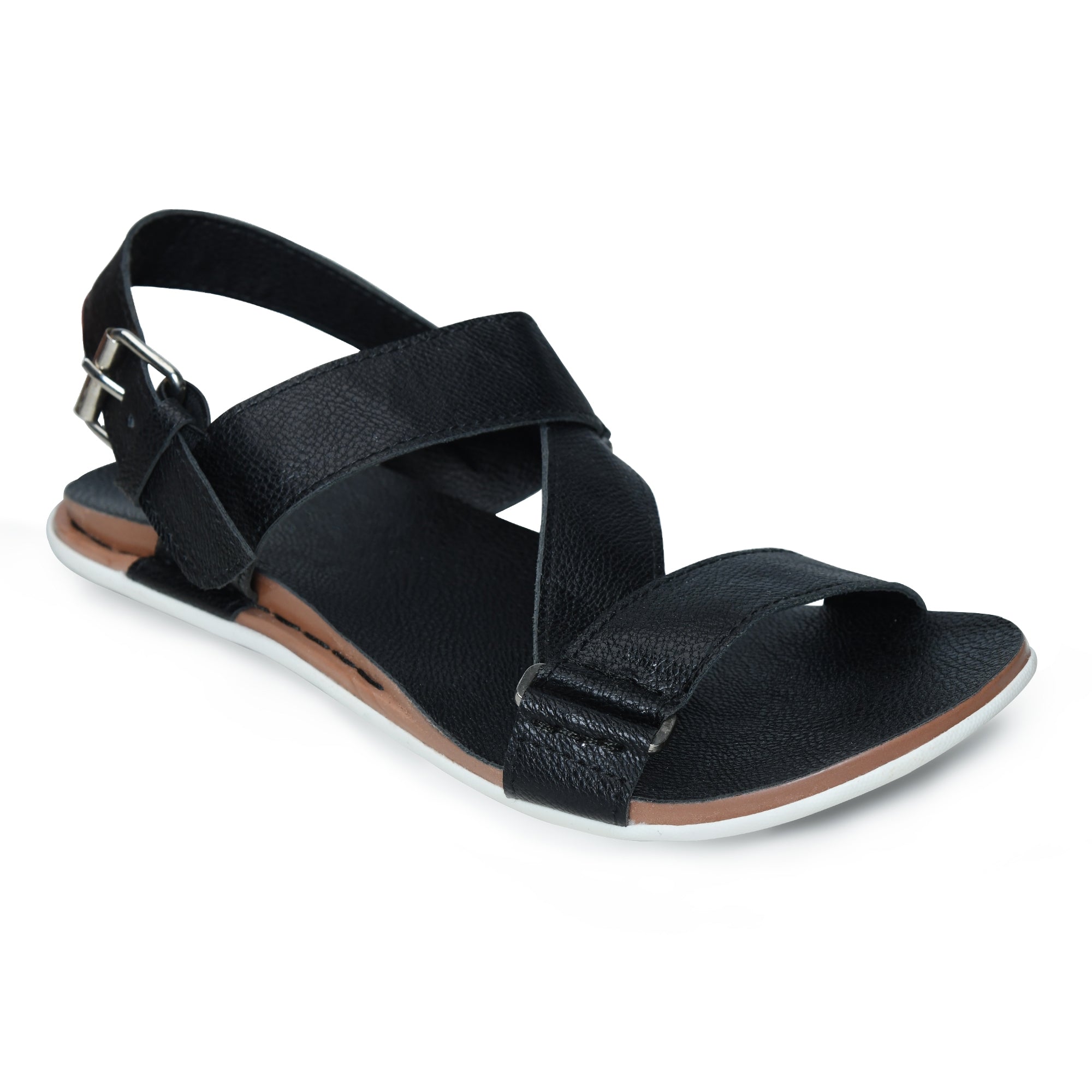
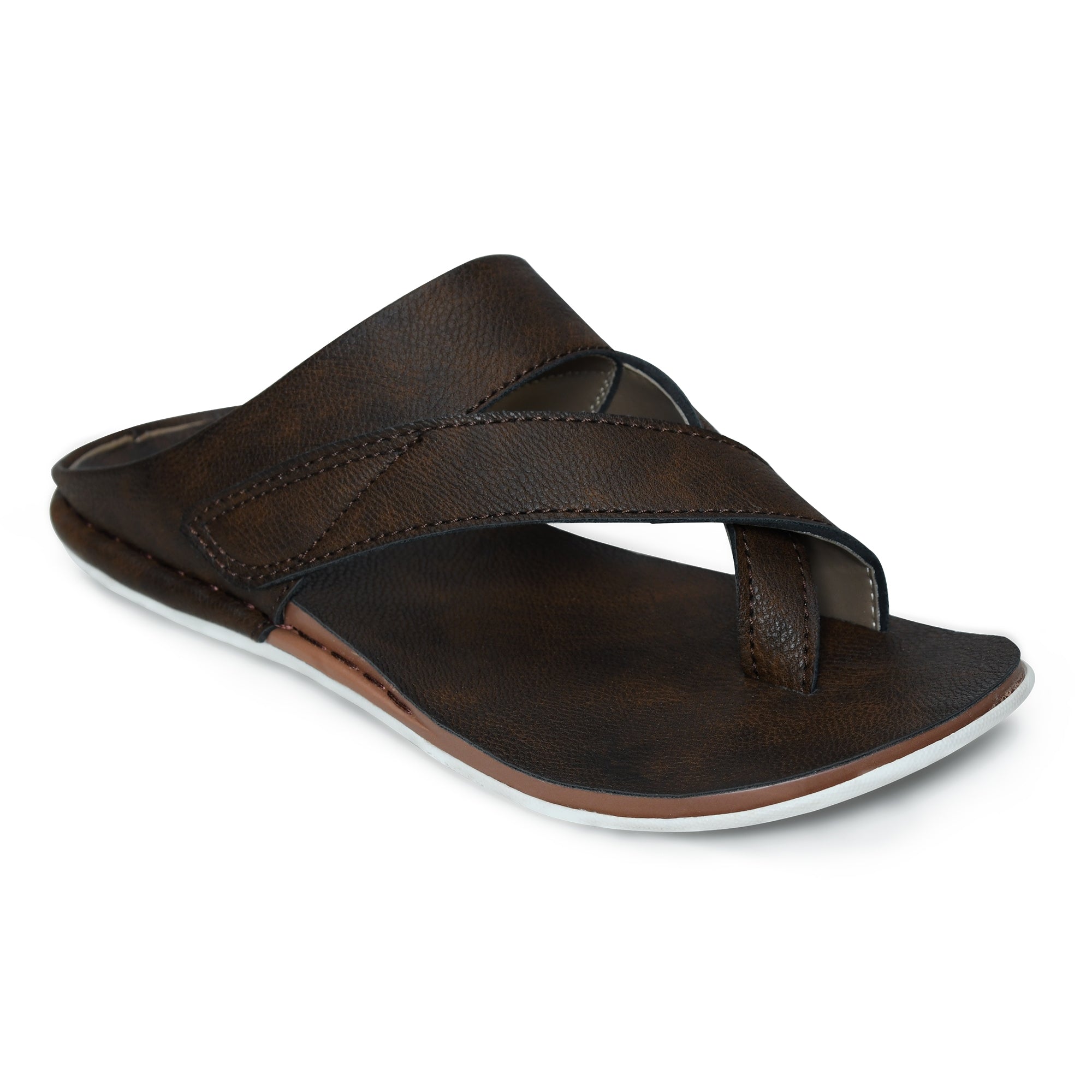
Current STEPSOFT product media showing one T-strap-inspired option. The photograph helps compare shape; it is not evidence of leather, handmade construction or geographic origin. Check the live product details, colours and available sizes.
Five checks before you choose
Check
What to look at
What not to assume
Shape
Toe loop, centre strap, side straps, opening and footbed outline in the actual photographs
That every pair using a similar silhouette has the same construction
Material
The upper, lining, footbed and sole descriptions on that product page
Leather, faux leather or any tanning method from appearance alone
Fit
Your longer foot measurement, the available size selector and the return terms
That sandal and closed-shoe sizes always match
Use
Outfit, venue, expected walking and whether you prefer a flatter or more cushioned footbed
Waterproofing, grip, medical support or all-day comfort unless the exact listing supports it
Evidence
Clear product photographs and specific, internally consistent descriptions
“Authentic,” “asli,” “handmade,” “GI-certified” or “authorised user” status without proof
What does the Kolhapuri name tell a buyer?
It can describe a recognised footwear tradition and, in online retail, is also used for related silhouettes. That makes it useful for discovery, but not enough to verify every product claim.
India’s official intellectual-property authority explains that a Geographical Indication identifies goods connected with a definite territory and with a quality, reputation or characteristic associated with that origin. Its introduction lists Kolhapuri chappal as an example and separately explains registered proprietors and authorised users. Therefore, a product should not be called GI-certified or sold as an authorised-user product merely because it resembles a Kolhapuri shape. See the IP India introduction to Geographical Indications.
STEPSOFT does not use this guide to claim that every item in its catalogue is an “authentic,” “original” or GI-authorised Kolhapuri. The individual product page is the source of truth for its stated material, construction, colour and availability.
Choose the shape from the actual product photographs
Start with what can be verified visually. Check where the toe loop sits, how wide the central strap is, whether the footbed appears flat or cushioned, and how much of the foot the upper covers. Compare front, side and top views when the gallery provides them. These visible features help you decide whether the pair suits your preferences without turning a style label into a material or performance claim.
A toe loop that suits one person can feel intrusive to another. A broader strap may look more substantial, while a narrower arrangement can leave more of the foot exposed. Neither is automatically better. The practical choice is the one that matches your foot shape and intended outfit.
Read materials component by component
Do not infer “genuine leather” from colour, grain, smell tests or a water-drop test. Such home checks can be misleading and can damage a finish. Instead, look for a product page that identifies the relevant components. The upper and footbed can use different materials, and the outsole may use another material entirely.
Upper: the straps or visible material over the foot.
Lining: the layer touching the foot beneath the upper, if the listing identifies one.
Footbed: the surface under the foot; it may be flat, shaped or cushioned.
Outsole: the bottom surface contacting the ground.
If a component is not stated, treat it as unknown rather than guessing. Browse the current STEPSOFT Kolhapuri collection and open each product page to compare its own description and photographs.
Measure first; do not rely on a universal conversion
Place a sheet of paper on a hard floor against a wall.
Stand with your heel lightly touching the wall and mark the end of the longest toe.
Repeat for both feet and use the longer measurement.
Compare that measurement with the information available for the exact product.
When the pair arrives, test it indoors while keeping the current return conditions in mind.
A good visual fit usually keeps the heel and toes supported by the footbed without forcing the toe loop or straps. Do not assume that a sandal should be sized up or down simply because of its style name. Use the STEPSOFT Kolhapuri fit checklist for a measurement-led process.
Match the pair to the occasion
For a kurta-pajama or festive outfit, compare the footwear colour and visible detailing with the garment in similar lighting. For casual use, consider how exposed you want the foot to be and how the strap layout feels during an indoor try-on. For longer events, make the decision from the exact footbed and fit information rather than assuming every traditional-looking pair has the same comfort or support.
The kurta-pajama footwear matcher offers a simple outfit-first decision path. It is styling guidance, not a guarantee about comfort or performance.
Care depends on the stated material and finish
There is no safe universal oil, conditioner or cleaning routine for every Kolhapuri-style pair. First identify the material and finish stated on the product page. For routine dust, use a clean dry cloth. If a pair becomes damp, let it dry away from direct heat. Before applying any cleaner or conditioner, follow product-specific instructions or test cautiously in an inconspicuous area.
For a material-led decision tree, use the STEPSOFT footwear care guide. Product lifespan depends on construction, frequency of wear, surfaces, storage and care; this guide does not promise a fixed number of months or years.
Claims that need product-level evidence
Claim
Evidence a buyer should expect
Leather, pure leather or genuine leather
An explicit material statement for the exact product and, ideally, the relevant components
Handmade or artisan-made
A clear maker or process statement tied to that product
GI-certified or authorised user
Verifiable registration or authorised-user evidence, not just a style name
Waterproof, anti-slip or durable
A product-specific statement supported by appropriate testing or evidence
Orthopedic, therapeutic or arch-support
Specific design and substantiation; a cushioned appearance alone is insufficient
Frequently asked questions
Which Kolhapuri chappal is best for men?
The best choice is the pair whose verified material, visible shape, measured fit, intended use and return terms match the buyer. There is no universal winner.
Are all Kolhapuri chappals made of leather?
No assumption is safe across the whole online market. Read the exact product’s material description; similar-looking pairs can use different materials.
Should sandal size be the same as shoe size?
Not always. Closed shoes, sandals and different lasts can fit differently. Measure both feet and use the information for the exact product.
Does the Kolhapuri name prove GI-authorised status?
No. IP India distinguishes a registered Geographical Indication from registered proprietors and authorised users. A seller or product needs its own evidence for such a claim.
How should a Kolhapuri-style pair be cleaned?
Begin with the stated material and finish. Remove dry dust gently, avoid direct heat when drying, and do not apply a treatment unless it is suitable for that exact material.
How this guide was prepared
Prepared by Hammad Shahid for STEPSOFT. Reviewed 24 September 2026 using the live STEPSOFT catalogue and product imagery, current Search Console language, and IP India’s official Geographical Indications introduction, which showed a page update dated 14 September 2026. The previous guide’s universal claims about leather, handmaking, GI status, break-in time, medical support, price thresholds and lifespan were removed because they were not verified for every referenced product. Product pages remain the source of truth for current specifications and availability.