Exceptional Customer Service @ 9336832036
Buy more save more - Buy 2 pairs — extra 10% off
Buy 1 Pair of Flip Flops, Get 1 Pair FREE!
Extra 5% OFF on Prepaid Orders + Free shipping
Exceptional Customer Service @ 9336832036
Buy more save more - Buy 2 pairs — extra 10% off
Buy 1 Pair of Flip Flops, Get 1 Pair FREE!
Extra 5% OFF on Prepaid Orders + Free shipping
Exceptional Customer Service @ 9336832036
Buy more save more - Buy 2 pairs — extra 10% off
Buy 1 Pair of Flip Flops, Get 1 Pair FREE!
Extra 5% OFF on Prepaid Orders + Free shipping
Exceptional Customer Service @ 9336832036
Buy more save more - Buy 2 pairs — extra 10% off
Buy 1 Pair of Flip Flops, Get 1 Pair FREE!
Extra 5% OFF on Prepaid Orders + Free shipping
Exceptional Customer Service @ 9336832036
Buy more save more - Buy 2 pairs — extra 10% off
Buy 1 Pair of Flip Flops, Get 1 Pair FREE!
Extra 5% OFF on Prepaid Orders + Free shipping
Exceptional Customer Service @ 9336832036
Buy more save more - Buy 2 pairs — extra 10% off
Buy 1 Pair of Flip Flops, Get 1 Pair FREE!
Extra 5% OFF on Prepaid Orders + Free shipping
Exceptional Customer Service @ 9336832036
Buy more save more - Buy 2 pairs — extra 10% off
Buy 1 Pair of Flip Flops, Get 1 Pair FREE!
Extra 5% OFF on Prepaid Orders + Free shipping
Exceptional Customer Service @ 9336832036
Buy more save more - Buy 2 pairs — extra 10% off
Buy 1 Pair of Flip Flops, Get 1 Pair FREE!
Extra 5% OFF on Prepaid Orders + Free shipping
Exceptional Customer Service @ 9336832036
Buy more save more - Buy 2 pairs — extra 10% off
Buy 1 Pair of Flip Flops, Get 1 Pair FREE!
Extra 5% OFF on Prepaid Orders + Free shipping
Exceptional Customer Service @ 9336832036
Buy more save more - Buy 2 pairs — extra 10% off
Buy 1 Pair of Flip Flops, Get 1 Pair FREE!
Extra 5% OFF on Prepaid Orders + Free shipping
Kurta Pajama Ke Saath Kaunsa Footwear Pehne? Men’s Outfit Matcher
STEPSOFT
0 comments
Kurta-pajama ke saath footwear kaunsa pehne? For a relaxed kurta, start with an open-toe Kolhapuri-style sandal; for a more structured outfit, compare a Peshawari sandal; for an embroidered sherwani or formal function, consider an enclosed mojari. These are outfit-matching suggestions, not a claim that one design fits every foot or occasion. Check the exact pair’s front coverage, closure, finish, size and live listing before buying.
Illustrative editorial outfit scene, not a STEPSOFT product photo. Compare actual listings below.
STEPSOFT’s current men’s catalogue includes each of these shapes. This guide uses visible product design and current catalogue listings rather than a universal comfort ranking, a “best brand” list or an unsupported authenticity claim.
Quick kurta footwear matcher
Kurta outfit and setting
Shape worth comparing
Check before ordering
Simple cotton or everyday kurta-pajama
Open-toe Kolhapuri-style chappal
Toe loop or T-strap, colour, sole profile and size
Neat Pathani suit or structured kurta
Peshawari-style sandal
Front coverage, side openings and backstrap or slip-on entry
Embroidered kurta, sherwani or groom’s function
Mojari or jutti
Closed upper, toe shape and outfit detailing
Minimal kurta with western layers
Plain loafer or ethnic slip-on
Whether the pair looks intentionally formal rather than mismatched
Use the table as an outfit selector, not a promise about fit or wear time. A precise answer depends on the event, garment hem, colour palette and how the specific footwear sits on your feet.
For an everyday kurta: start with the silhouette
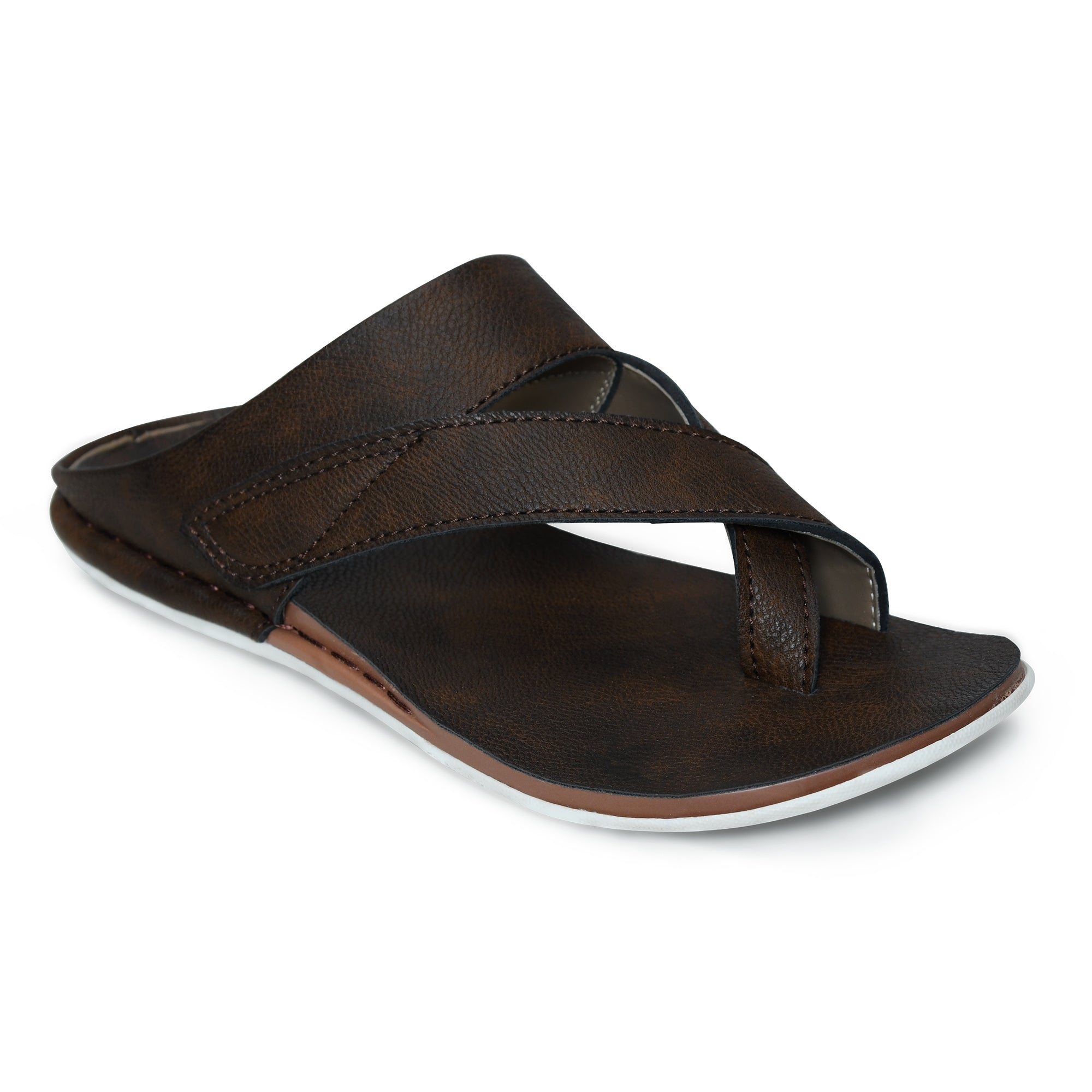
An open sandal shows the toes and visually lightens a simple, straight kurta. A T-strap or toe-ring design may add a focal line without requiring heavy embellishment. If the pajama gathers at the ankle, look at the footwear from the side as well as from above: the hem should not hide the entire upper.
Browse the current men’s Kolhapuri collection, then review the exact product images and sizes. A “Kolhapuri-style” design description on a retail listing does not certify its geographic origin or any individual product under a GI registration. For that distinction, see STEPSOFT’s separate evidence-led Kolhapuri history guide.
For a structured kurta: compare Peshawari front and closure
A Peshawari silhouette offers more upper coverage than most open-toe Kolhapuri designs, but the precise toe opening and backstrap vary between pairs. It can create a stronger outline next to a long kurta or Pathani suit. Do not infer leather type, all-day performance or a particular closure from the Peshawari name alone.
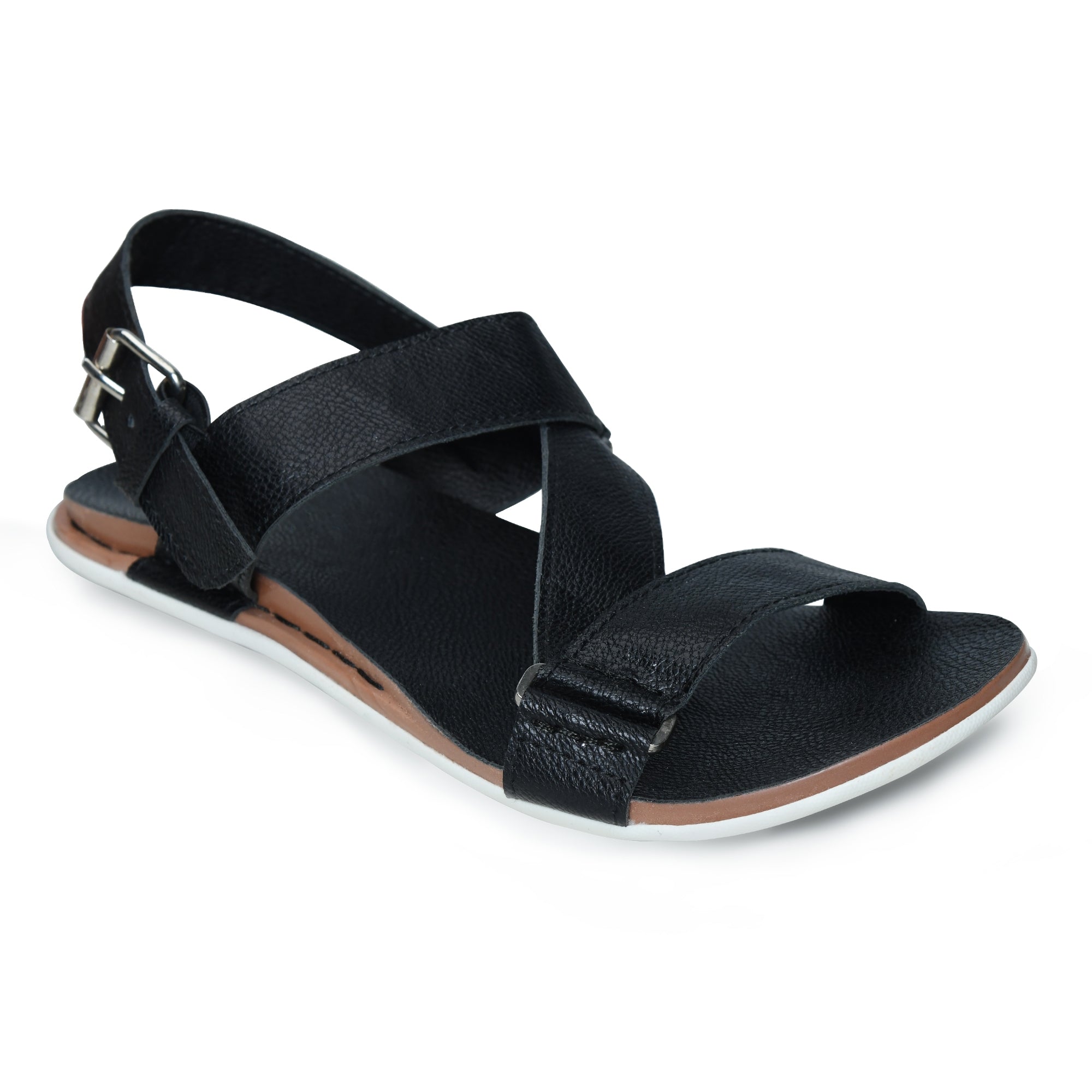
Current STEPSOFT suede-finish Peshawari listing, shown as exact product media. Compare the front opening and rear strap on its live listing before ordering.
For an example of the shape, see the suede-finish Peshawari sandal. The colour, size options and availability shown on its product page are more reliable than a fixed value repeated in this guide. The broader Peshawari collection lets you compare current designs.
For sherwani or embroidered kurta: consider a mojari
A mojari’s more enclosed upper reads differently from a sandal. An ivory, white or other pale pair may visually relate to a pale sherwani, while a more contrasted colour can suit an outfit with a corresponding accent. Compare the actual fabric pattern and silhouette, rather than assuming every mojari is leather, handmade or identical in fit.
Current STEPSOFT white patterned wedding mojari, exact product media. The image describes appearance, not manufacture, material or fit.
Review the white wedding mojari listing for the current size and construction details. For sherwani-specific selection, read the wedding mojari guide; the present page stays focused on all kurta-pajama footwear shapes, avoiding a competing wedding guide.
Five-minute outfit and fit checklist
Describe your outfit: plain, patterned, embroidered or layered. Select at most two footwear shapes to compare.
Lay the kurta and footwear together in natural light. Check whether the footwear finish repeats a garment colour or deliberately contrasts it.
Look at front coverage. If a closed upper matters at the event, reject an open-toe pair before comparing ornamentation.
Check heel entry and ankle area: slip-on, backstrap and buckle are not interchangeable.
Check the live product size, selected colour, availability and return terms. Try a new pair indoors on a clean surface rather than discovering pressure or movement at the venue.
Keep a photo of the full outfit from ankle to shoulder. That simple visual check is more useful than ranking sandals by an invented universal “best” score. If deciding between two sandal types, use the Peshawari comparison section; the separate Kolhapuri size guide addresses measurement in more detail.
Common questions
Can I wear sandals with a kurta pajama?
Yes, for many informal or festive outfits. Check the event dress expectations and choose the front coverage you prefer.
Is a mojari always better for a sherwani?
No. Its enclosed profile is one option; outfit detailing, venue and your fit assessment determine the useful choice.
Can a Peshawari sandal work with a Pathani suit?
It can provide a structured-looking upper. Check the individual style’s front opening, side sections and closure.
Do the sandal and mojari sizes fit the same?
Not necessarily. Read size details for each exact product rather than treating a label as a guarantee across constructions.
Which colour goes with a white kurta?
Neutral brown, white and black are visual options, not rules. Compare the whole outfit and the exact listed colour in natural light.
How this guide was prepared
Prepared by the STEPSOFT content team on 15 September 2026 from the published product and collection imagery linked above and live STEPSOFT guides. Product appearances were checked visually; no independent manufacturing, GI or performance testing is asserted. The hero and outfit scene are editorial illustrations, not actual saleable STEPSOFT products. For present-day price, stock and returns, rely on the linked product page. Start by comparing open sandal designs or shopping structured Peshawari options when the matcher points there.