Exceptional Customer Service @ 9336832036
Buy more save more - Buy 2 pairs — extra 10% off
Buy 1 Pair of Flip Flops, Get 1 Pair FREE!
Extra 5% OFF on Prepaid Orders + Free shipping
Exceptional Customer Service @ 9336832036
Buy more save more - Buy 2 pairs — extra 10% off
Buy 1 Pair of Flip Flops, Get 1 Pair FREE!
Extra 5% OFF on Prepaid Orders + Free shipping
Exceptional Customer Service @ 9336832036
Buy more save more - Buy 2 pairs — extra 10% off
Buy 1 Pair of Flip Flops, Get 1 Pair FREE!
Extra 5% OFF on Prepaid Orders + Free shipping
Exceptional Customer Service @ 9336832036
Buy more save more - Buy 2 pairs — extra 10% off
Buy 1 Pair of Flip Flops, Get 1 Pair FREE!
Extra 5% OFF on Prepaid Orders + Free shipping
Exceptional Customer Service @ 9336832036
Buy more save more - Buy 2 pairs — extra 10% off
Buy 1 Pair of Flip Flops, Get 1 Pair FREE!
Extra 5% OFF on Prepaid Orders + Free shipping
Exceptional Customer Service @ 9336832036
Buy more save more - Buy 2 pairs — extra 10% off
Buy 1 Pair of Flip Flops, Get 1 Pair FREE!
Extra 5% OFF on Prepaid Orders + Free shipping
Exceptional Customer Service @ 9336832036
Buy more save more - Buy 2 pairs — extra 10% off
Buy 1 Pair of Flip Flops, Get 1 Pair FREE!
Extra 5% OFF on Prepaid Orders + Free shipping
Exceptional Customer Service @ 9336832036
Buy more save more - Buy 2 pairs — extra 10% off
Buy 1 Pair of Flip Flops, Get 1 Pair FREE!
Extra 5% OFF on Prepaid Orders + Free shipping
Exceptional Customer Service @ 9336832036
Buy more save more - Buy 2 pairs — extra 10% off
Buy 1 Pair of Flip Flops, Get 1 Pair FREE!
Extra 5% OFF on Prepaid Orders + Free shipping
Exceptional Customer Service @ 9336832036
Buy more save more - Buy 2 pairs — extra 10% off
Buy 1 Pair of Flip Flops, Get 1 Pair FREE!
Extra 5% OFF on Prepaid Orders + Free shipping
Leather Kolhapuri Chappal Care: How to Clean and Dry a Pair
Hammad Shahid
0 comments
How do you clean a leather Kolhapuri chappal? First verify the exact pair’s material and finish. Remove loose dust with a soft, dry cloth or suitable soft brush; if its product instructions permit a damp cloth, test a small hidden area and wipe gently without soaking. Let the pair dry naturally away from direct heat before storage. Do not automatically apply oil, soap, conditioner or sunlight to every pair: leather finishes and mixed-material components differ.
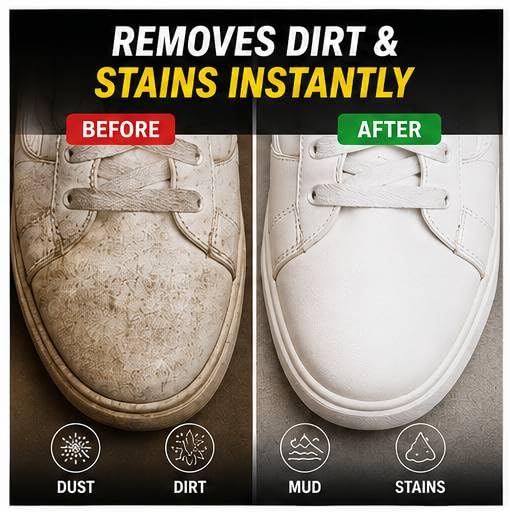
Illustrative editorial cleaning scene, not a product-specific treatment demonstration.
This is a conservative decision path for men’s leather ethnic footwear, not a product-specific guarantee. If a stain, coating, glue, decorative trim or suede-like finish is involved, contact the seller or use the care instructions for that exact style before adding a treatment.
Cleaning decision tree: dry dust, moisture or uncertain finish?
What you see
Lowest-risk first step
Stop and verify when...
Dry surface dust
Soft dry cloth; gentle brush only if suitable
The finish sheds colour or trim moves
Slight surface moisture
Blot gently, allow natural indoor airflow
Water reached lining, glue or an unknown component
Persistent stain
Check exact finish and product care advice
No compatible cleaner is specified
Suede, nubuck or coated look
Identify the finish before cleaning
A general smooth-leather instruction is the only advice available
The word “leather” alone cannot tell you which cleaning chemical suits a coating, coloured upper or mixed-material sole. If the pair is sold as faux leather, use its own instructions instead of the leather routine.
Step 1: identify and inspect the pair
Look at the live listing, invoice or label for material and any specific care instructions. An open sandal can have an upper, footbed, stitching, adhesive and outsole made from different components. Check for beadwork, surface colour, embossed texture or contrast finishing. Photograph any stain before treatment so you can compare the same area afterwards.
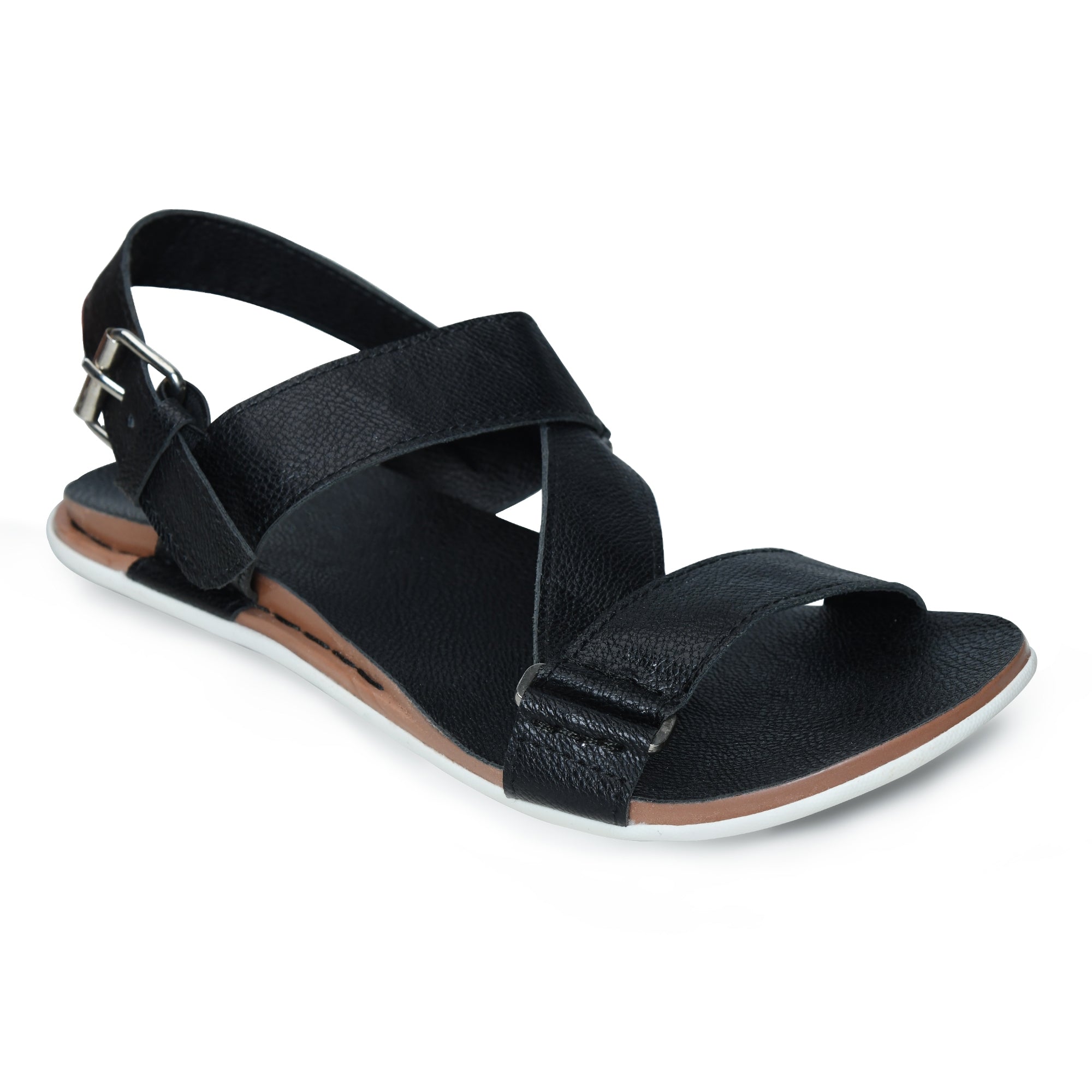
Current STEPSOFT soft-leather Kolhapuri-style slipper, exact product media. The dark finish and visible T-strap are shown; check the live listing for its care instructions.
For a catalogue example see the soft-leather Kolhapuri-style slipper. Its page, rather than a generic article, should govern what may safely be applied to that SKU. A traditional-style toe loop can create small corners where dust gathers: lift loose dust without pulling at the joint or dragging abrasive particles across the upper.
Step 2: remove dust without making a stain bigger
Use a clean, soft, dry cloth for the broad surfaces. Work around straps and joins with gentle pressure. A brush should be soft and appropriate to the finish. Avoid scrubbing a coloured area before checking whether dye transfers; vigorous brushing can make a mark more visible rather than removing it.
On a dry pair, start with the least invasive action and stop if the cloth picks up colour. For mud, let the surface dry first if the product’s instructions allow it, then gently remove loose material. Do not soak the sandal, immerse the footbed, or use a detergent mix copied from a different shoe type without approval for the specific finish.
Step 3: if damp, dry naturally before storage
Blot excess surface moisture with a soft cloth. Place the pair in a ventilated indoor space away from heaters and direct heat; wait until the upper, footbed and underside are dry before wearing or packing. Do not leave damp footwear sealed in a bag. A source from the footwear maker Gucci’s shoe-care guide also recommends air-drying away from direct heat for its shoes; that supports a cautious drying principle, not a claim that STEPSOFT’s specific pair shares Gucci’s treatments.
Conditioner and cleaner: no universal recipe
Some smooth-leather products may have compatible conditioners, while a suede-like or coated surface may require an entirely different approach. Determine the precise finish and consult the product’s own instructions before applying a commercial cleaner, oil, wax or polish. Patch-test only where the product maker allows it. Household oil applied generously can affect colour and adjacent components; do not infer that “traditional” means oil is always required.
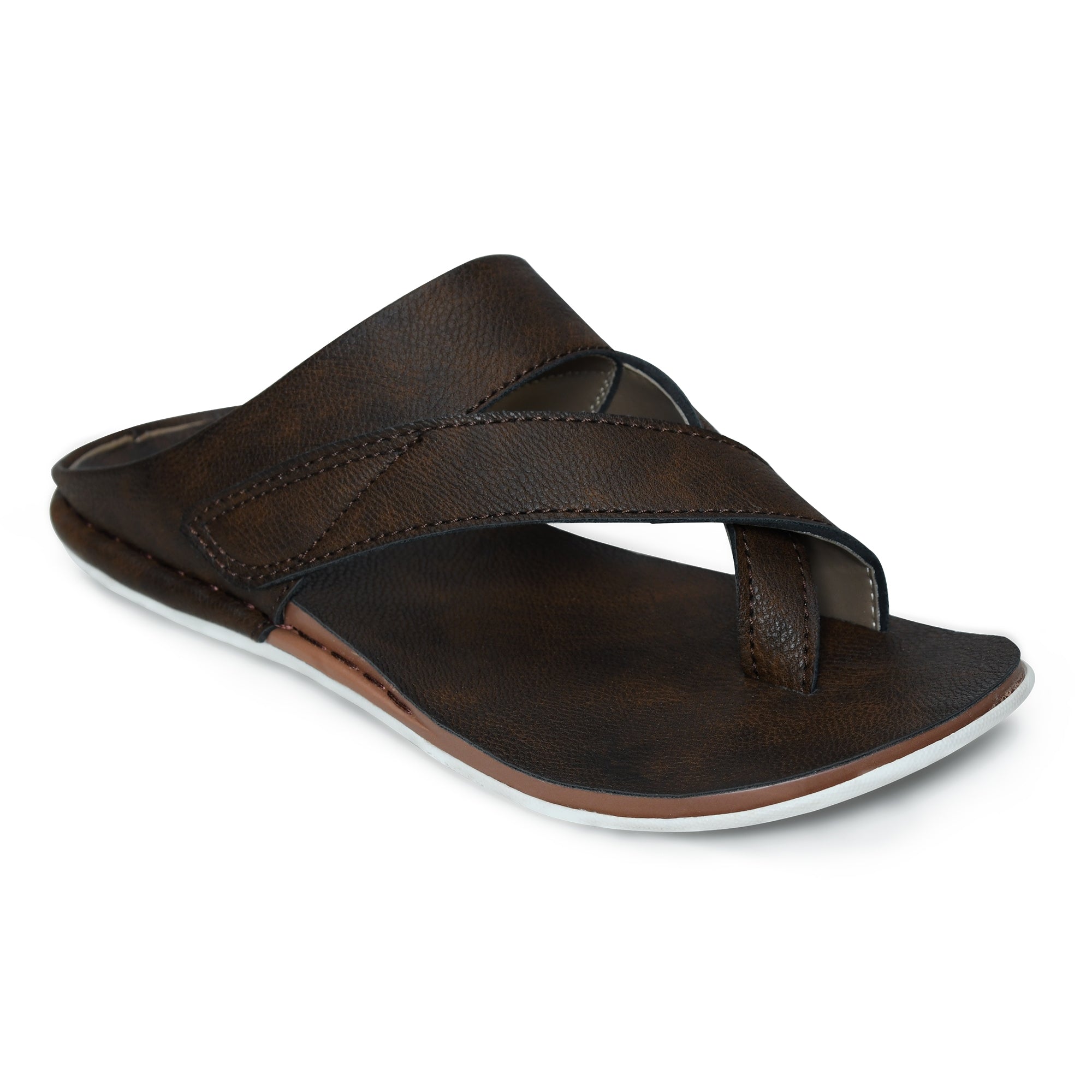
Current STEPSOFT black V-shape leather slipper, exact product media. A different upper shape and finish call for the exact listing’s care guidance.
The V-shape slipper illustrates why different footwear constructions should not inherit the same treatment automatically. STEPSOFT’s broader care guidance also covers sandals and juttis, but this section focuses on practical Kolhapuri cleaning without claiming waterproofing or a fixed product life.
Storage and a repeatable five-check routine
After wearing, inspect the upper and underside for loose dirt.
Remove surface dust gently while the pair is dry.
If damp, blot and wait for natural airflow to dry all visible areas.
Leave the pair unsealed until dry; store where air circulates, away from unnecessary heat.
Before applying a chemical, confirm the exact material/finish and its product-specific instructions. If uncertain, ask STEPSOFT about that SKU.
Keep the checklist with the pair or save it on your phone. You can also use the Kolhapuri size guide when replacing a pair; cleaning cannot fix an unsuitable size or loose construction.
Common questions
Can I wash Kolhapuri chappals under a tap?
Do not assume immersion is safe. Check the pair’s exact instructions and avoid soaking an unknown construction.
Should I use oil to make the leather soft?
Only if that specific product’s verified care instructions permit the oil and method. This guide does not recommend it universally.
Is direct sunlight the best way to dry wet leather?
Avoid treating direct heat or sun as a universal solution. Prefer natural indoor airflow unless the exact maker advises otherwise.
Can I use the same cleaner on faux leather?
No automatic equivalence exists. Identify faux-leather or other finish on its own listing and follow the relevant instructions.
What if colour comes off onto the cloth?
Stop cleaning, preserve a photo of the transfer and seek product-specific advice before further treatment.
How this guide was prepared
Prepared by STEPSOFT’s content team on 15 September 2026. We compared the live STEPSOFT examples above with Gucci’s publicly available shoe-care guidance for the limited natural-drying principle. No laboratory testing, lifetime prediction or special treatment approval for any STEPSOFT SKU is asserted. The hero is an illustrative editorial scene and not an actual saleable SKU. To compare current styles, browse the Kolhapuri collection and confirm the exact pair’s care notes before purchase.