Exceptional Customer Service @ 9336832036
Buy more save more - Buy 2 pairs — extra 10% off
Buy 1 Pair of Flip Flops, Get 1 Pair FREE!
Extra 5% OFF on Prepaid Orders + Free shipping
Exceptional Customer Service @ 9336832036
Buy more save more - Buy 2 pairs — extra 10% off
Buy 1 Pair of Flip Flops, Get 1 Pair FREE!
Extra 5% OFF on Prepaid Orders + Free shipping
Exceptional Customer Service @ 9336832036
Buy more save more - Buy 2 pairs — extra 10% off
Buy 1 Pair of Flip Flops, Get 1 Pair FREE!
Extra 5% OFF on Prepaid Orders + Free shipping
Exceptional Customer Service @ 9336832036
Buy more save more - Buy 2 pairs — extra 10% off
Buy 1 Pair of Flip Flops, Get 1 Pair FREE!
Extra 5% OFF on Prepaid Orders + Free shipping
Exceptional Customer Service @ 9336832036
Buy more save more - Buy 2 pairs — extra 10% off
Buy 1 Pair of Flip Flops, Get 1 Pair FREE!
Extra 5% OFF on Prepaid Orders + Free shipping
Exceptional Customer Service @ 9336832036
Buy more save more - Buy 2 pairs — extra 10% off
Buy 1 Pair of Flip Flops, Get 1 Pair FREE!
Extra 5% OFF on Prepaid Orders + Free shipping
Exceptional Customer Service @ 9336832036
Buy more save more - Buy 2 pairs — extra 10% off
Buy 1 Pair of Flip Flops, Get 1 Pair FREE!
Extra 5% OFF on Prepaid Orders + Free shipping
Exceptional Customer Service @ 9336832036
Buy more save more - Buy 2 pairs — extra 10% off
Buy 1 Pair of Flip Flops, Get 1 Pair FREE!
Extra 5% OFF on Prepaid Orders + Free shipping
Exceptional Customer Service @ 9336832036
Buy more save more - Buy 2 pairs — extra 10% off
Buy 1 Pair of Flip Flops, Get 1 Pair FREE!
Extra 5% OFF on Prepaid Orders + Free shipping
Exceptional Customer Service @ 9336832036
Buy more save more - Buy 2 pairs — extra 10% off
Buy 1 Pair of Flip Flops, Get 1 Pair FREE!
Extra 5% OFF on Prepaid Orders + Free shipping
Peshawari Sandals for Men: Fit, Styles and Kolhapuri Comparison
Hammad Shahid
0 comments
Peshawari sandal vs Kolhapuri chappal: the clearest visible difference is usually the upper. A Peshawari-style sandal often has a broader crossed or closed-front upper with open side sections, while a Kolhapuri-style chappal often has an open toe with a T-strap or toe loop. Actual products vary, so compare the exact front, side, closure and size details. Neither style name alone proves material, origin, certification, comfort or performance.
Illustrative shape comparison. Use the current STEPSOFT product photographs below to inspect real listings.
This page owns the category-comparison question: Which shape better matches the coverage, outfit and fit checks I want? If you have already chosen the Peshawari category and need to compare Peshawari pairs, use the separate Peshawari sandals buying guide.
Peshawari vs Kolhapuri at a glance
Comparison point
Peshawari-style sandal
Kolhapuri-style chappal
Front view
Often broader crossing straps or more front coverage; some designs remain partly open
Often an exposed forefoot with a T-strap, toe loop or open strap arrangement
Side view
Open side sections can sit below a more covered upper
More of the foot is normally visible, depending on the exact strap pattern
Rear and closure
May use a backstrap, buckle or slip-on construction
Commonly slip-on, but the selected listing is the source of truth
Fit pressure to check
Instep, front edge, heel entry and any fastening
Toe loop, T-strap placement, forefoot width and footbed length
Outfit starting point
Choose when you want a more covered, visually structured sandal
Choose when you want an open sandal silhouette
What the name proves
A retail style label, not a universal material or origin specification
A retail style label; an individual pair’s GI or authorised-user status requires separate evidence
The table describes visible comparison cues, not laboratory findings. Weight, grip, flexibility, longevity and comfort cannot be inferred from the category name or one photograph.
See the difference in current STEPSOFT product photographs
The next two images are resized copies of live STEPSOFT product media. They show two specific listings; they do not establish a rule for every Peshawari or Kolhapuri product.
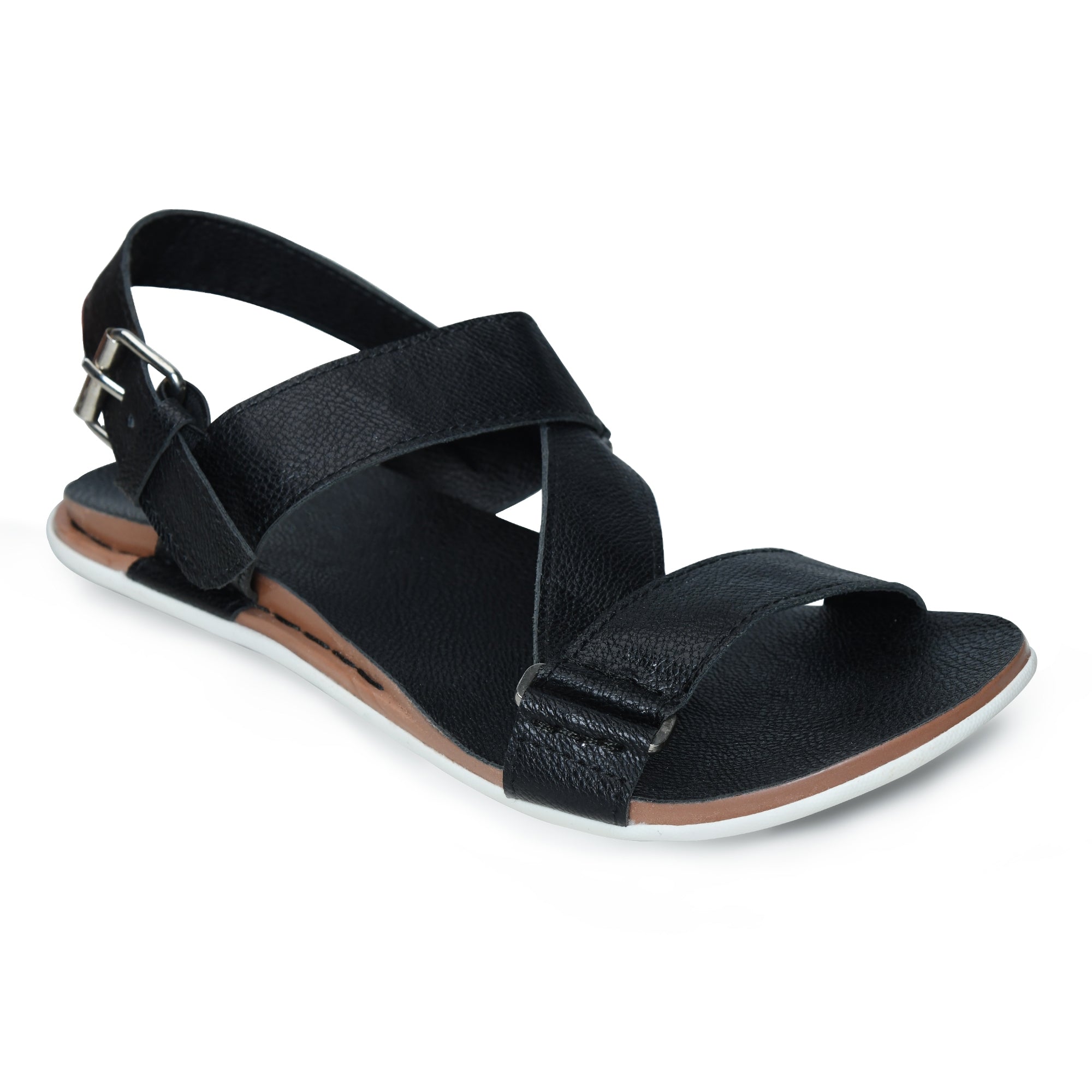
A current STEPSOFT closed-front ethnic slip-on: inspect the crossing upper, covered front and open side.
On this closed-front ethnic slip-on listing, the product photographs make front coverage and side openings visible. Check the live page for the selected variant’s stated material, size choices, price and availability. For comparisons within the category, continue to the Peshawari buying guide.
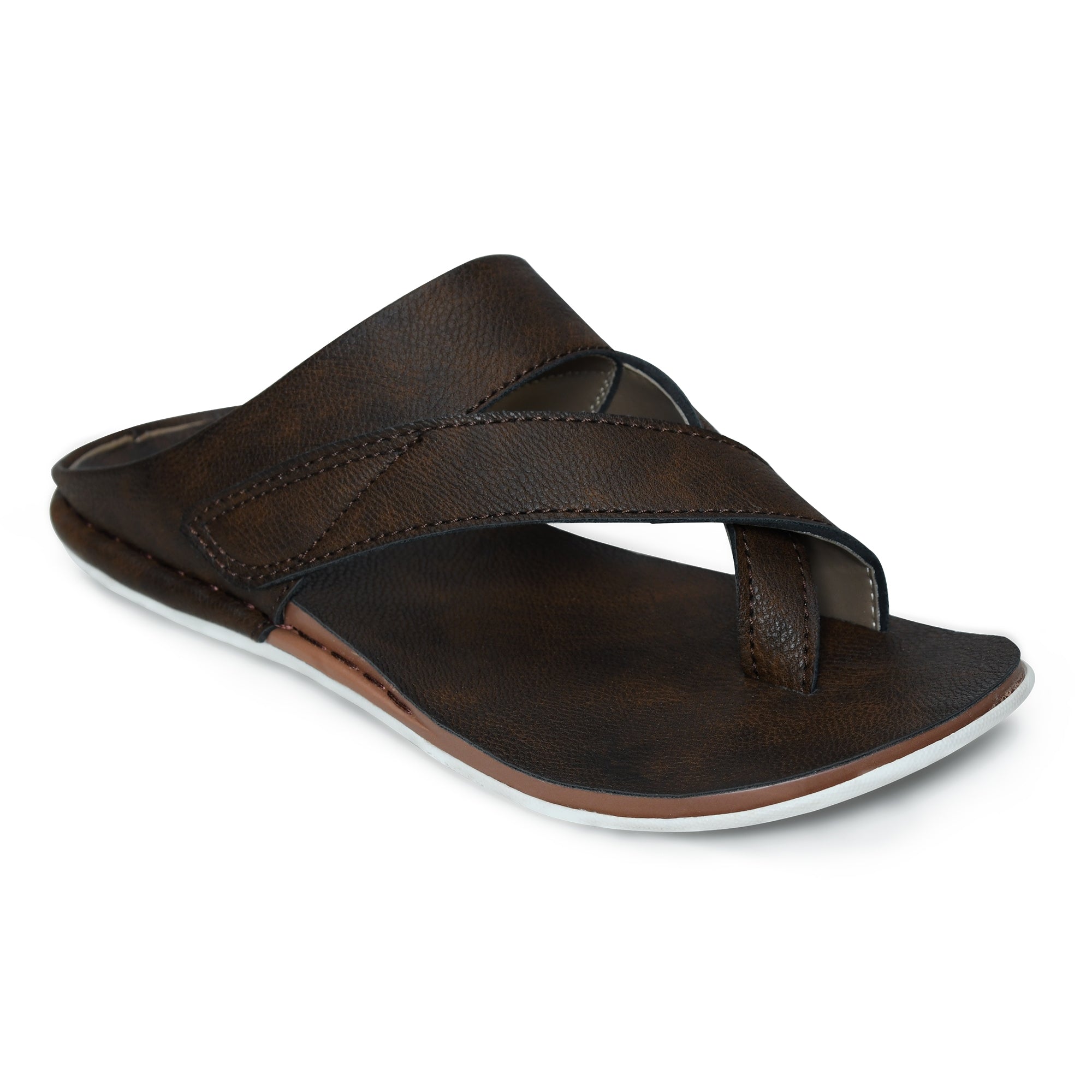
A current STEPSOFT Kolhapuri-style chappal: the exposed forefoot, toe loop and strap arrangement are visible.
Decide on toe exposure. If visible toes are a firm “no,” begin with the more covered product image. If you prefer an open sandal outline, begin with the Kolhapuri-style image.
Check where the upper touches your foot. Peshawari-style uppers can place more contact across the instep and front; Kolhapuri-style straps can concentrate contact around a toe loop or T-strap.
Compare the rear. Confirm whether the exact pair is slip-on or uses a backstrap or buckle. Do not assume the category supplies a particular closure.
Match visual weight to the outfit. A broader upper can look more structured; an open chappal can look lighter. Neither is automatically more formal.
Open the two live listings. Compare the selected size, colour, price, availability and material wording before ordering.
The same printed size does not guarantee the same usable internal space across an open chappal and a more covered sandal. Measure both feet, use the exact listing’s size information and test both feet indoors on a clean surface while the pair remains return-eligible.
For a covered or crossed upper, check the instep and front edge while standing and walking.
For a toe-loop or T-strap design, check rubbing points and whether the foot remains fully supported by the footbed.
For either style, check heel position, selected-variant availability and the current return terms.
Do not rely on a promise that every upper stretches or “breaks in” by a fixed amount.
Both can work visually with kurta pajama; the more useful question is whether you want a covered or open silhouette. A plain kurta can take either, depending on colour and proportion. With a detailed garment, compare whether the footwear should recede or add another visual element. For a sherwani or groom outfit, include mojari and other closed-shoe options in the comparison instead of treating two sandal categories as the only choices.
Customer questions
What is the main difference between Peshawari and Kolhapuri footwear?
The most dependable visual difference is usually the upper: Peshawari-style sandals often show more front coverage or broader crossing straps, while Kolhapuri-style chappals often show an open toe with a toe loop or T-strap. Verify the exact pair.
Is a Peshawari sandal always closed-toe?
No universal rule should be inferred from the name. Some listings are closed at the front; others have openings. Use front and side photographs.
Are Kolhapuri chappals always leather?
No product-wide material claim is made here. Check the material wording for the exact listing and selected variant rather than relying on the category name.
Do Peshawari sandals and Kolhapuri chappals use the same sizing?
Not automatically. A shared size label does not make the toe space, upper pressure or footbed shape identical. Measure and test each pair on its own terms.
Which page should I use after choosing Peshawari?
Use STEPSOFT’s Peshawari buying guide to compare toe coverage, fastening, material wording, sizes and live product evidence within that category.
How this guide was prepared
This comparison was reviewed by Hammad Shahid for STEPSOFT on 25 September 2026. It uses the linked current STEPSOFT product photographs, live catalogue pages and the store’s separate intent map for comparison and buying-guide questions. We compared visible front coverage, side openings, toe loops, straps and closures. We did not infer manufacturing origin, universal material, certification, grip, durability or comfort from a style name.