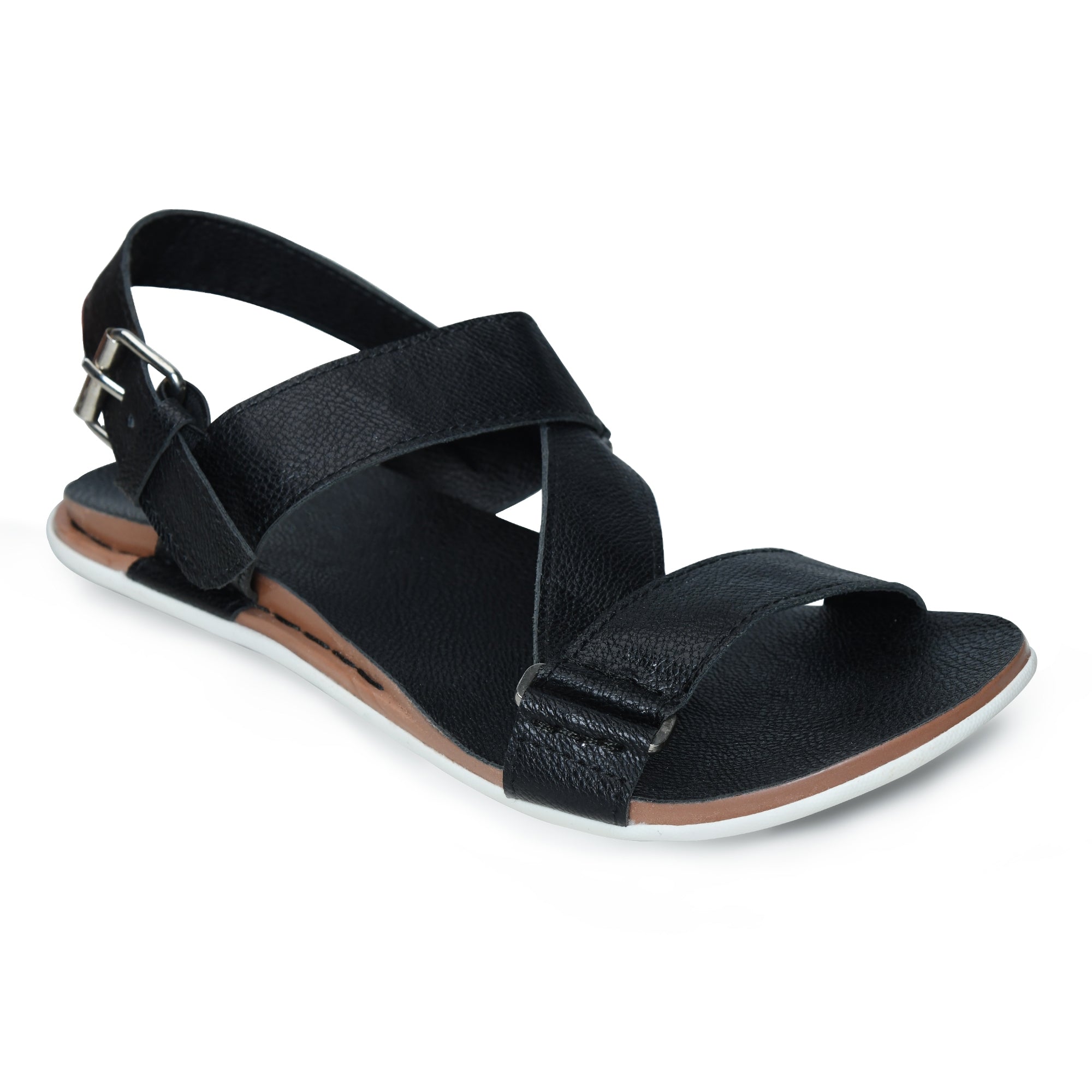
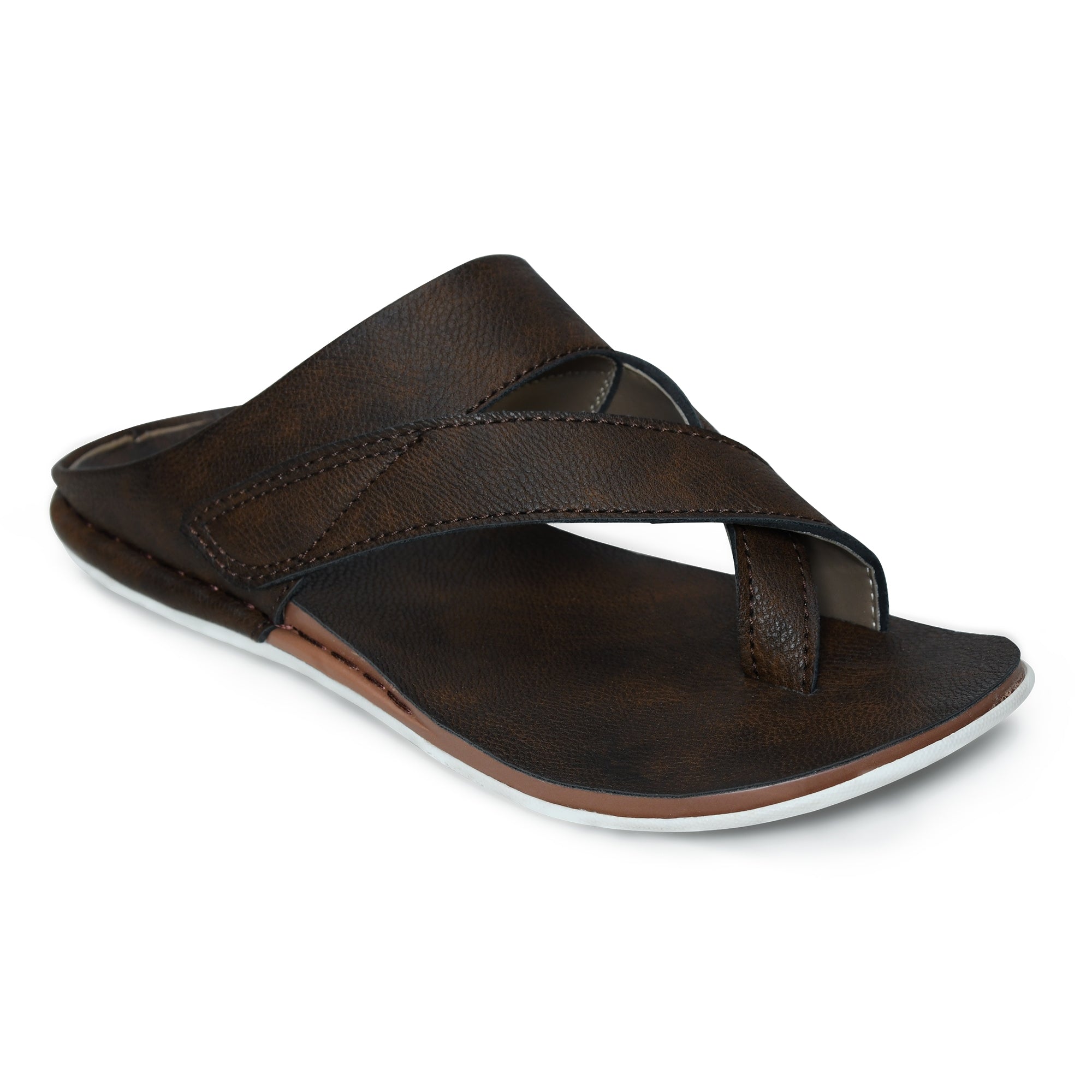
The Kolhapuri chappal is one of India's most recognisable cultural objects. Every Indian knows what it is. Most have worn one at some point. Some have grown up watching fathers and grandfathers choose it as their everyday footwear.
But very few people know its full history — a story that spans eight centuries, royal patronage, the independence movement, international fashion scandals, and one of the most significant craft protection milestones in Indian history.
Here is the complete story.
The 12th Century: Royal Patronage and the Charmakar Tradition
The roots of the Kolhapuri chappal trace back to the 12th century in the Deccan plateau, under the Kalyani Chalukya dynasty. King Bijjala and his minister Basavanna were instrumental in elevating and formally recognising the work of the Charmakar community — skilled leatherworkers whose craft had been fundamental to daily life for generations.
Royal patronage gave these artisans economic stability and social recognition. It also gave their craft continuity across generations. The techniques that define Kolhapuri footwear today — hand-stitching without nails, layered leather soles, vegetable dye tanning — were being refined in this period, passed from artisan to apprentice in an unbroken chain.
The footwear made in this tradition was practical and durable. The open-toe, T-strap construction was a rational response to the regional climate: breathable in the heat, flexible enough for uneven terrain, and durable enough to last through years of use. Kolhapuri chappals made with traditional methods are documented as capable of lasting a lifetime with appropriate care.
From Karnataka to Kolhapur — How the Craft Found Its Name
The craft spread through the Deccan and into what is now Maharashtra, eventually becoming most strongly associated with the town of Kolhapur. The name 'Kolhapuri' was not an official designation initially — it emerged from the pattern of trade as the footwear made in and around Kolhapur became widely recognised and sought after.
Different regions and artisan families developed their own variations. Known in different places as Kapashi, Pukari, Paytaan, and Bakkalnali — each name indicating a village or town of origin — the broader category eventually consolidated under 'Kolhapuri' as Kolhapur's position as the craft's commercial centre grew.
Royal Endorsement: Chhatrapati Shahu Maharaj and the Industrial Phase
A major expansion of the Kolhapuri craft industry came under Chhatrapati Shahu Maharaj, the progressive ruler of the princely state of Kolhapur who reigned from 1894 until his death in 1922. Shahu Maharaj was a reformer and a champion of artisan communities. Under his rule, twenty-nine tanning centres were established, artisan training was formalised, and production capacity grew significantly.
This royal endorsement elevated the Kolhapuri chappal from common rural footwear to an object with cultural prestige — worn across social strata, from farmers and craftsmen to the Maratha gentry. The royal patronage also improved the quality of production, as artisans working with institutional support could afford better materials and more time for elaborate designs.
The 20th Century: The Saudagar Innovation and the Mumbai Market
The 20th century brought a design evolution that made Kolhapuri chappals more accessible to urban consumers. The Saudagar family of Kolhapur introduced a lighter, slimmer version — known as the Kanwali, or 'chappal with ears' due to its distinctive side flaps. This design was more practical for city wear while retaining the traditional construction methods.
When a retail store called J.J. and Sons in South Mumbai stocked Kanwali-style Kolhapuris, they sold immediately. Orders followed quickly — first for another pair, then for twenty, then in larger quantities. The Mumbai market, with its mixed population and appetite for quality goods, responded enthusiastically to footwear that combined durability, craftsmanship, and Indian cultural identity.
The Saudagar family shared their methods, training other artisans to meet the growing demand while maintaining the construction standards that made the Kolhapuri distinctively excellent. This act of knowledge-sharing is part of what allowed the craft to scale without losing its soul.
The 1970s: American Hippies and the First Global Moment
The Kolhapuri chappal's first significant international following came from an unexpected direction. In the 1970s, American counterculture travellers visiting India — drawn to the handcrafted aesthetic and bohemian associations of Indian craft — discovered Kolhapuri chappals and brought them home. They appeared in boutiques and vintage stores across California and New York, where they were associated with a particular kind of world-traveller identity.
This was, by the standards of later decades, a modest international presence. But it established the Kolhapuri's first foothold outside India and demonstrated its appeal to audiences who had no connection to the cultural tradition from which it came — responding instead to the quality and character of the object itself.
2019: The GI Tag — India Formally Protects the Heritage
In July 2019, Kolhapuri chappals received a Geographical Indication (GI) tag from the Controller General of Patents, Designs and Trade Marks of India. This is one of the most significant intellectual property protections available for traditional crafts — the same category that protects Darjeeling tea, Basmati rice, Mysore silk, and Pashmina wool.
The GI tag means that only footwear made in specific districts of Maharashtra and Karnataka can legally be called Kolhapuri chappals:
| State |
Protected Districts |
| Maharashtra |
Kolhapur, Sangli, Satara, Solapur |
| Karnataka |
Bagalkot, Belgavi, Dharwad, Bijapur |
This protection was designed to address a real threat: cheap machine-made imitations from outside the designated regions were being sold as Kolhapuris, undercutting the artisans whose craft and livelihood the name represents.
Browse authentic Kolhapuri chappal for men →
2025–2026: The Prada Moment and What It Changed
In June 2025, Prada presented sandals at its Spring/Summer 2026 menswear show in Milan that bore an unmistakable resemblance to Kolhapuri chappals. The designs were listed simply as 'leather sandals'. No credit to Kolhapur. No mention of Indian craft. No acknowledgment of the GI tag.
The backlash was immediate and global. What followed — a formal acknowledgment from Prada, visits to Kolhapur artisan communities, and ultimately a collaboration with LIDCOM and LIDKAR artisan groups — brought the Kolhapuri chappal more international attention than it had received in the entirety of its eight-century history.
Online sales of authentic Kolhapuri chappals in India surged. Younger Indians rediscovered the craft with fresh eyes — not as something their parents wore, but as a design object with a heritage that the world's most prestigious luxury brands were acknowledging, even if awkwardly.
How a Kolhapuri Is Actually Made
The traditional manufacturing process involves a series of distinct stages:
-
Leather preparation: Buffalo or cow hide is tanned using vegetable dyes — not chemical treatments — preserving the leather's natural character.
-
Cutting and skiving: Tanned leather is cut to pattern and skived to appropriate thickness for each component.
-
Hand-stitching: The upper is hand-stitched to the sole using waxed cotton thread. No nails or adhesives are used in traditional construction.
-
Sole building: Multiple layers of leather are stitched together to create the characteristic resilient sole.
-
Decorative handwork: Punched patterns, braided details, and leather flaps are added by skilled artisans — the element that distinguishes one artisan's output from another.
-
Tokana finish: The assembled chappal is beaten with a technique called tokana, which sets the shape and softens the leather. Finishing oil or beeswax is applied for the characteristic sheen.
An elaborate pair of Kolhapuris can take up to six weeks to complete. An everyday pair, produced by an experienced artisan, can be done in a day's work — but the construction principles remain the same.
Wearing History
When you wear a Kolhapuri chappal, you are wearing an object that connects you to a twelve-century chain of craft, knowledge, and cultural identity. The artisan who made your pair learned from someone who learned from someone — in a line that stretches back to the courts of the Deccan plateau.
That is not a marketing claim. That is simply what the object is.
Shop the STEPSOFT Kolhapuri collection →
Own a Piece of 800 Years of Indian Heritage