Exceptional Customer Service @ 9336832036
Buy more save more - Buy 2 pairs — extra 10% off
Buy 1 Pair of Flip Flops, Get 1 Pair FREE!
Extra 5% OFF on Prepaid Orders + Free shipping
Exceptional Customer Service @ 9336832036
Buy more save more - Buy 2 pairs — extra 10% off
Buy 1 Pair of Flip Flops, Get 1 Pair FREE!
Extra 5% OFF on Prepaid Orders + Free shipping
Exceptional Customer Service @ 9336832036
Buy more save more - Buy 2 pairs — extra 10% off
Buy 1 Pair of Flip Flops, Get 1 Pair FREE!
Extra 5% OFF on Prepaid Orders + Free shipping
Exceptional Customer Service @ 9336832036
Buy more save more - Buy 2 pairs — extra 10% off
Buy 1 Pair of Flip Flops, Get 1 Pair FREE!
Extra 5% OFF on Prepaid Orders + Free shipping
Exceptional Customer Service @ 9336832036
Buy more save more - Buy 2 pairs — extra 10% off
Buy 1 Pair of Flip Flops, Get 1 Pair FREE!
Extra 5% OFF on Prepaid Orders + Free shipping
Exceptional Customer Service @ 9336832036
Buy more save more - Buy 2 pairs — extra 10% off
Buy 1 Pair of Flip Flops, Get 1 Pair FREE!
Extra 5% OFF on Prepaid Orders + Free shipping
Exceptional Customer Service @ 9336832036
Buy more save more - Buy 2 pairs — extra 10% off
Buy 1 Pair of Flip Flops, Get 1 Pair FREE!
Extra 5% OFF on Prepaid Orders + Free shipping
Exceptional Customer Service @ 9336832036
Buy more save more - Buy 2 pairs — extra 10% off
Buy 1 Pair of Flip Flops, Get 1 Pair FREE!
Extra 5% OFF on Prepaid Orders + Free shipping
Exceptional Customer Service @ 9336832036
Buy more save more - Buy 2 pairs — extra 10% off
Buy 1 Pair of Flip Flops, Get 1 Pair FREE!
Extra 5% OFF on Prepaid Orders + Free shipping
Exceptional Customer Service @ 9336832036
Buy more save more - Buy 2 pairs — extra 10% off
Buy 1 Pair of Flip Flops, Get 1 Pair FREE!
Extra 5% OFF on Prepaid Orders + Free shipping
For a men’s Diwali outfit, choose footwear by the kurta’s formality and the amount of toe coverage you want. An open Kolhapuri-style chappal suits a relaxed kurta-pajama, a broader Peshawari-style upper creates a more structured look, and a jutti or mojari gives the most closed, dress-like silhouette. The category name alone does not prove material, origin, comfort or performance, so inspect the exact product page before buying.
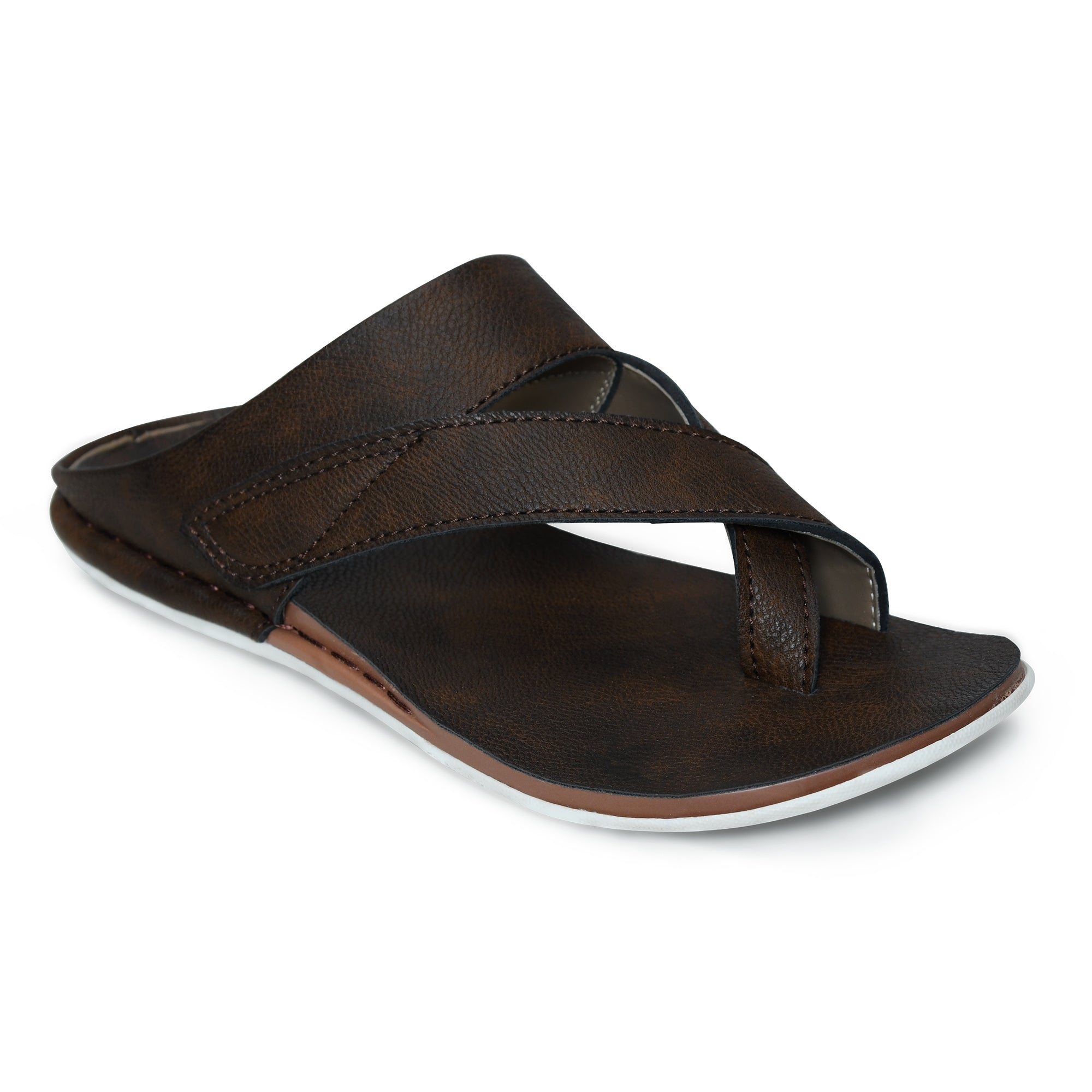
A current STEPSOFT brown Kolhapuri-style chappal. The open upper makes toe exposure part of the outfit decision.
This guide is for men choosing footwear for Diwali puja, family visits, dinners and festive gatherings in India. It does not rank one style as universally best. Instead, it gives you an outfit matcher and a final five-minute check using current STEPSOFT product images and live product options.
Quick Diwali footwear matcher
Outfit or plan
Useful starting shape
What to verify
Simple cotton kurta-pajama
Open Kolhapuri-style chappal
Toe-loop or strap pressure, footbed length and colour
Nehru jacket with kurta
Peshawari-style sandal or plain jutti
Front coverage, side opening and heel entry
Sherwani or more detailed festive set
Jutti, mojari or nagra
Toe shape, decoration level and trouser break
Kurta with trousers or jeans
Low-detail loafer, jutti or open sandal
Whether the footwear repeats an outfit colour
Several home visits in one day
A secure slip-on you can test indoors
Easy entry, movement at the heel and return terms
Start with the silhouette, not the label
Product titles can use overlapping words such as jutti, mojari, nagra, sandal and chappal. The visible structure is more useful. Ask three questions: are the toes open, partly covered or closed; does the footwear use a toe loop, crossing upper or enclosed vamp; and is there a rear strap or a slip-on heel? Those details affect how the pair looks under a kurta hem.
If you want a lighter, more open festive look, compare the current men’s Kolhapuri collection. If you prefer a broader front, compare the Peshawari collection. For an enclosed option, browse men’s juttis and mojaris. These are shopping paths, not claims that every item in a collection has identical materials or construction.
How to match colour without over-coordinating
Begin with the lower half of the outfit. A white, cream or beige pajama gives you room to repeat the kurta’s deeper accent in the footwear, while darker trousers often work with tan, brown or black. You do not need an exact colour match. A small repeat—such as brown footwear with brown buttons, a watch strap or a waistcoat detail—usually looks more deliberate than trying to match every element.
For a heavily detailed kurta or jacket, a quieter footwear finish keeps attention on the garment. For a plain kurta, a visible texture or restrained embroidery can add interest. Treat this as a visual balance rule, not a statement about which material lasts longer or feels better.
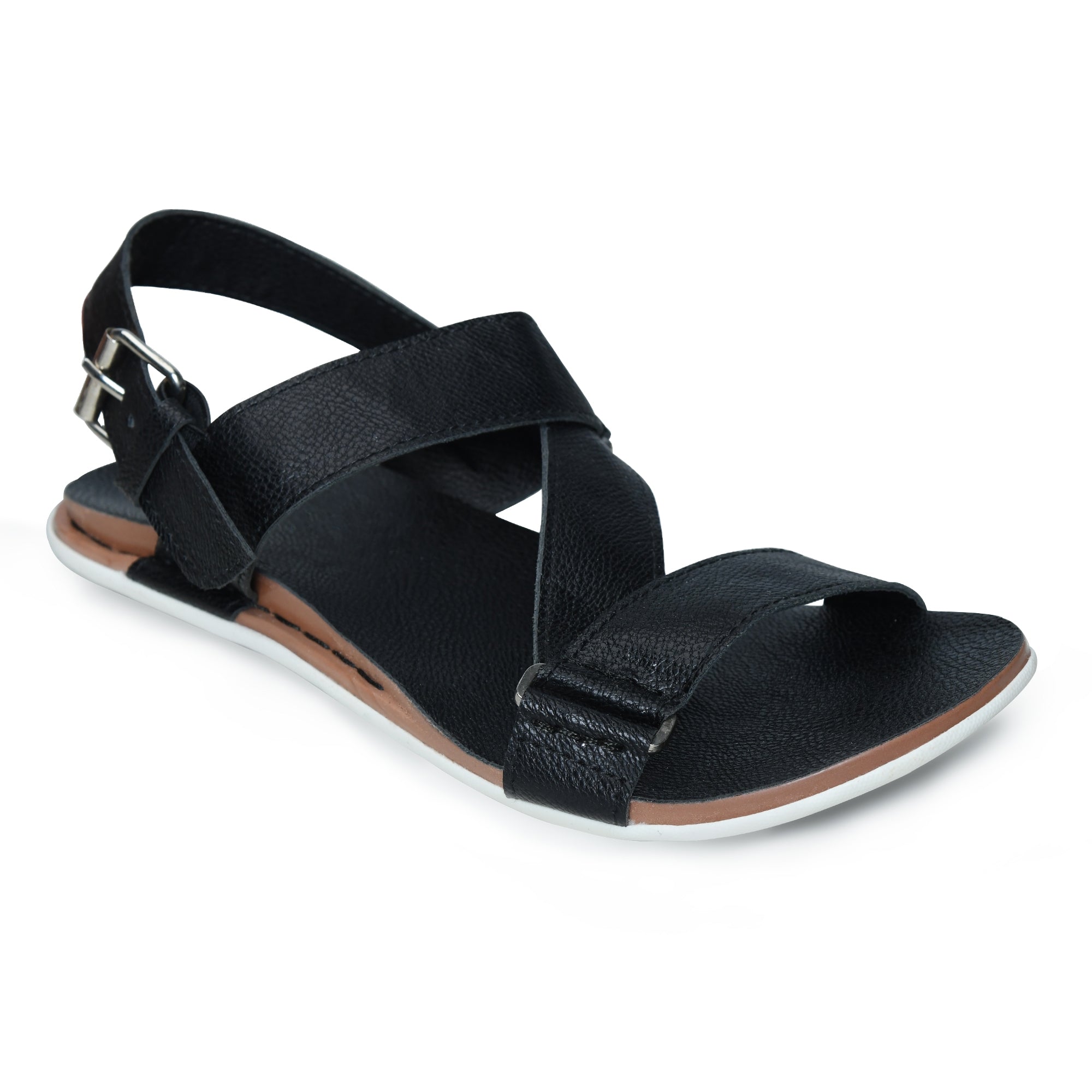
A current tan closed-front Peshawari-style sandal. Compare its coverage with the open Kolhapuri image rather than relying only on category names.
Puja, dinner and visiting: one pair or different pairs?
One pair can cover several plans when its colour and shape work with the whole outfit. The practical question is whether you will remove it repeatedly, walk outside, stand for photographs or sit cross-legged. A slip-on may be convenient for home visits, while a more enclosed pair may create a dressier outline for an evening gathering. Do not infer grip, weather resistance or long-hour comfort from appearance; those require product-level evidence that is not universal across the catalogue.
Before ordering, open the exact listing and check the selected colour, available size, current price and stock. Then read the current return terms. If you are comparing two pairs, save screenshots at the same scale so the toe shape and upper height are easy to compare.
Five-minute Diwali fit check
Measure both feet late in the day and use the longer measurement as your starting point.
Compare the exact product’s available size options; do not convert UK, EU and US sizes unless the listing provides the conversion.
Try the pair indoors on a clean surface with the same socks—or no socks—you plan to wear.
Check toe clearance, strap or vamp pressure, heel movement and whether your foot stays within the footbed.
Walk, turn and sit for a few minutes. Stop if you feel concentrated pressure rather than assuming it will disappear.
A current white embroidered Nagra jutti. Decoration and closed coverage create a different festive silhouette from an open sandal.
Questions men ask about Diwali footwear
What footwear should men wear with a kurta for Diwali?
Start with a Kolhapuri-style chappal, Peshawari-style sandal or jutti, then choose by toe coverage, outfit formality and exact fit.
Can I wear loafers with a kurta?
Yes, when the loafer’s colour and detail fit the outfit. A lower-detail slip-on can bridge a kurta-and-trouser combination.
Should festive footwear match the kurta exactly?
No. A related neutral or one repeated accent colour is usually enough; exact matching is optional.
Are jutti and mojari the same?
The terms often overlap in retail use. Inspect the exact toe shape, upper, opening and product details rather than assuming a fixed difference.
Which festive footwear is most comfortable?
There is no universal winner. Comfort depends on the exact pair, foot shape, size, pressure points and intended duration.
How this guide was prepared
Prepared by Hammad Shahid for STEPSOFT on 24 September 2026. The guide uses current published STEPSOFT product media and live catalogue options to compare visible footwear shapes. It does not infer materials, manufacturing origin, medical benefit, durability, grip or delivery time beyond an exact product listing. Recheck price, size and stock on the live product page before ordering.